Product Introduction
Guandata Metrics is a centralized management platform for enterprise key metrics, providing a complete product solution integrating metric definition, metric production, metric management, metric retrieval, lineage analysis, metric services, and metric insights, helping enterprises establish a unified metric system and realize the transformation from data-driven to metric-driven business decision-making.
This product is a paid add-on module. To request a trial, please contact the Guandata Data sales representative or customer success manager (usually the person responsible for service communication with your company).
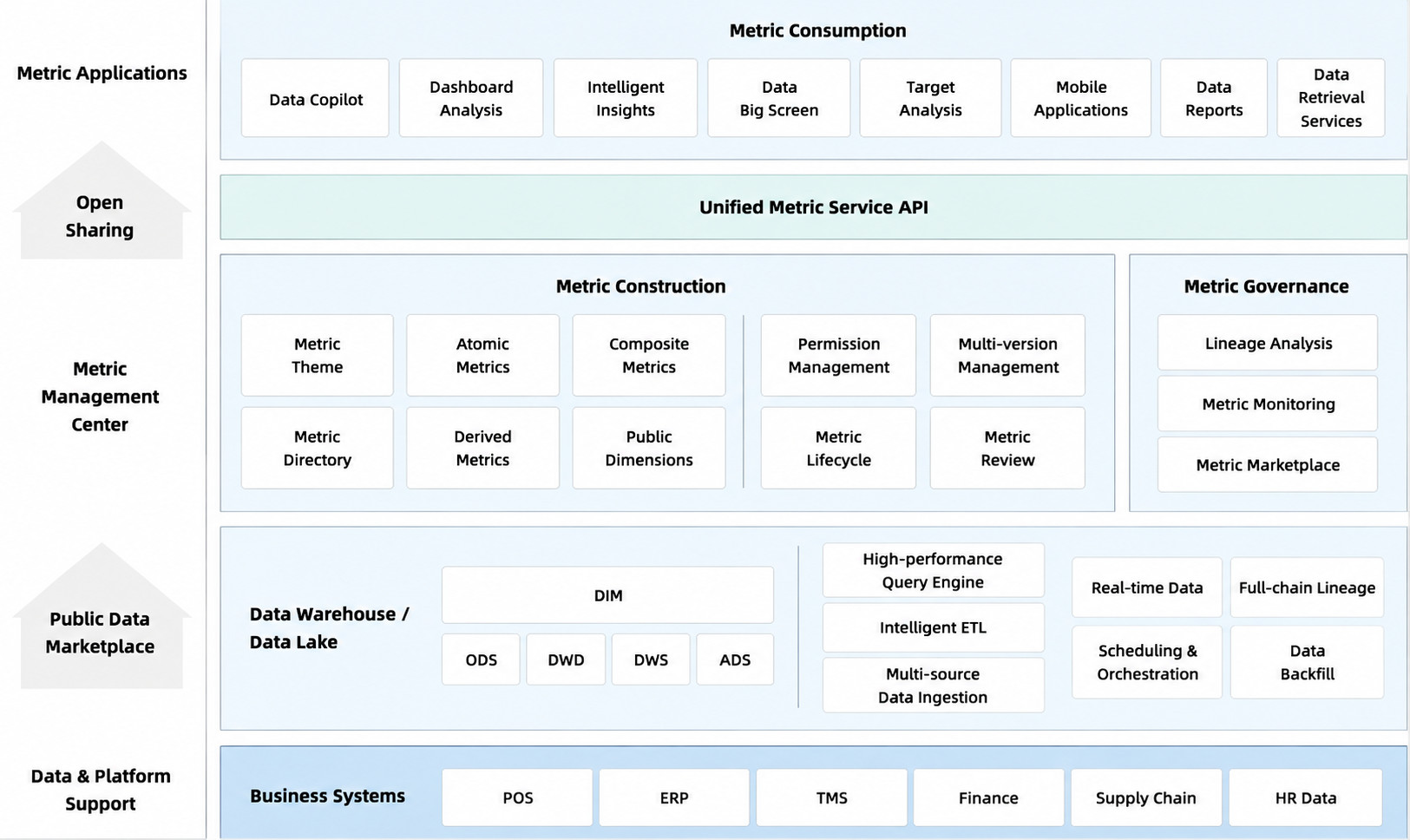
Highlights and Advantages
1. [Centralized Metric Management] The consistency of the Metric Center and the flexibility of BI analysis are organically combined on the same platform, finding a better balance between agility and control, and improving business analysis and governance efficiency.
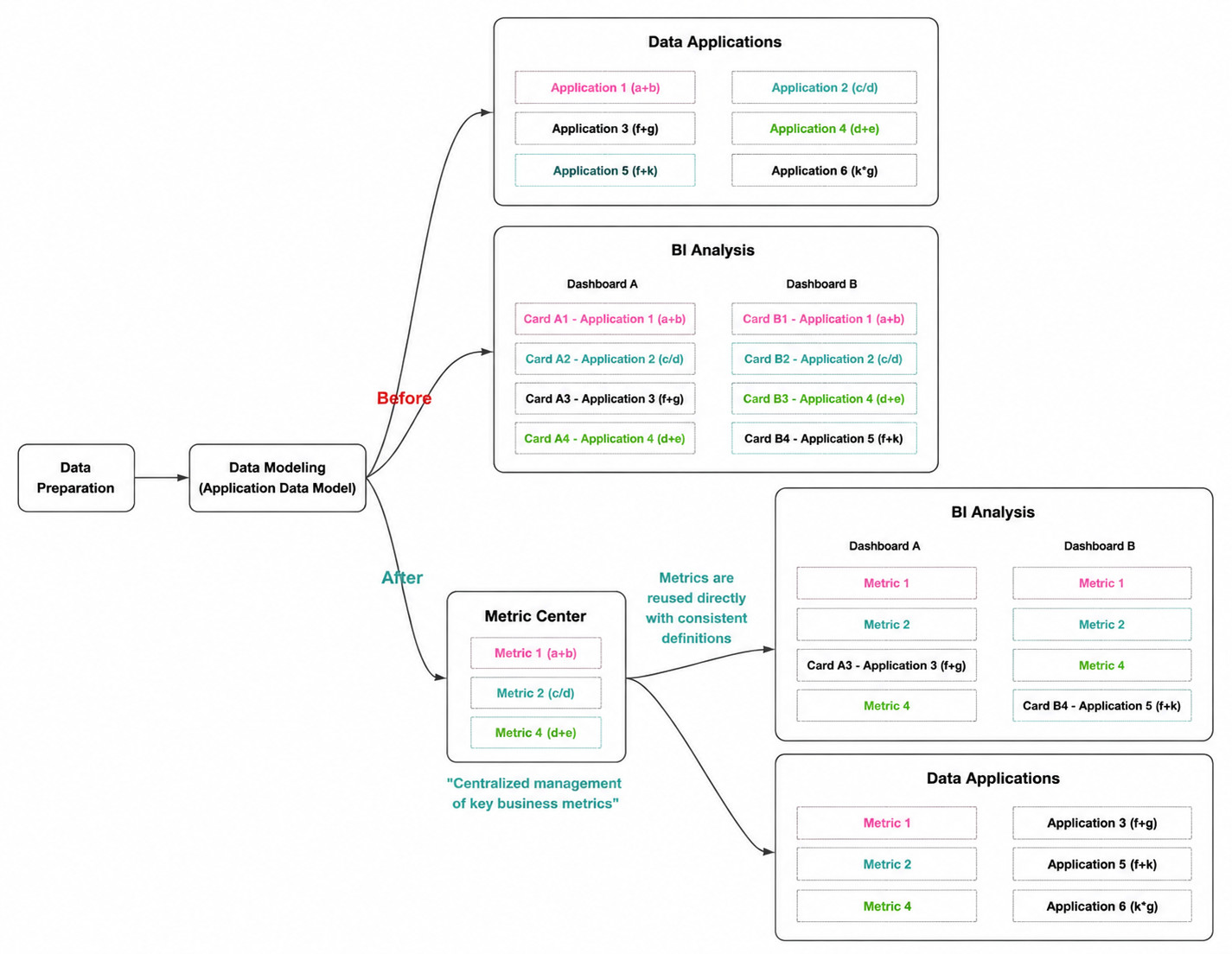
Before: After BI agile analysis is promoted to a certain stage in customers, the metric logic customized by various business parties becomes increasingly diverse. Metrics are scattered in various calculation fields of cards, and the phenomenon of "same name with different meanings, same meaning with different names" becomes more and more prominent. The cost of opening, sharing, and governance of the entire metric system surges.
After (Headless BI): The Metric Center is introduced to centrally define and manage metrics in a standardized way, providing unified query services for metric consumers, thereby eliminating the phenomenon of duplicate metric definitions, converging metric outlets, and ensuring that users, BI, and other analysis tools across multiple business terminals have a consistent understanding of the same metric.
2. [Definition is Production] Simplify the threshold of metric definition and application
Before: The metric system and metric caliber were maintained in offline Excel documents or traditional metric management tools. BI and other consumption links need to re-enter calculation calibers. Definition and production are separated, and over time, the disconnection between "management" and "consumption" leads to increasingly high maintenance and management costs.
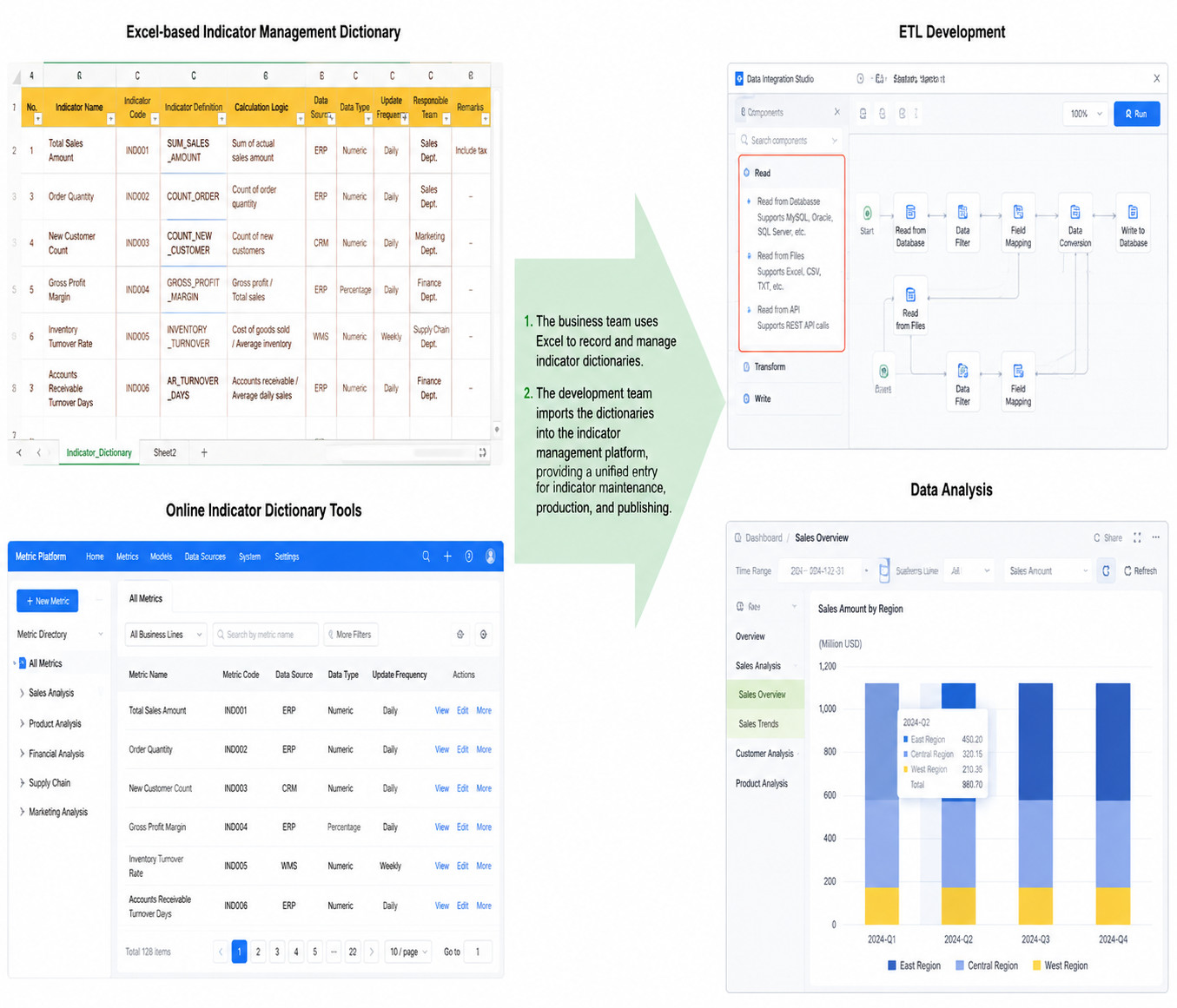
After: Users only need to define the calculation caliber of metrics in the Metric Center. "Define once, consume globally". BI dashboards can directly reference them without repeated definitions in the consumption link.
3. [Metric-Driven Data Analysis] Directly create reports based on self-service metric drag-and-drop
Before: During the metric definition process, users need to go through a lengthy process of pre-understanding business calibers, starting from tables or datasets for data exploration to confirm data availability, and then defining metric calculation calibers. They even need to spend a lot of time learning ETL or modeling through complex SQL.
After: Metrics, as a universal data language with lower understanding thresholds for business, replace relational tables with metrics and technical language with business language, reducing the threshold of data analysis and collaboration, precipitating key metrics, organizing collaboration more efficiently, and making "letting the business use it" more practical from data-driven to metric-driven.
4. [Open Unified Metric Services] Cross-application consumption of metrics is no longer difficult
Before: Metrics constructed in BI are scattered in calculation fields of datasets and cards, and cannot be reused by other systems. They can only be implemented by understanding metric calibers and redefining development.
After: Based on centralized metric management and unified metric service openness capability, "define once, consume multiple times" provides unified metric query capability for BI, CDP, and self-developed data application systems.