Metric Management
Overview
Guandata Metric Center supports two metric management methods: metric list and metric diagram, and supports metric lineage, online/offline, and version management.
Operation Steps
List Mode
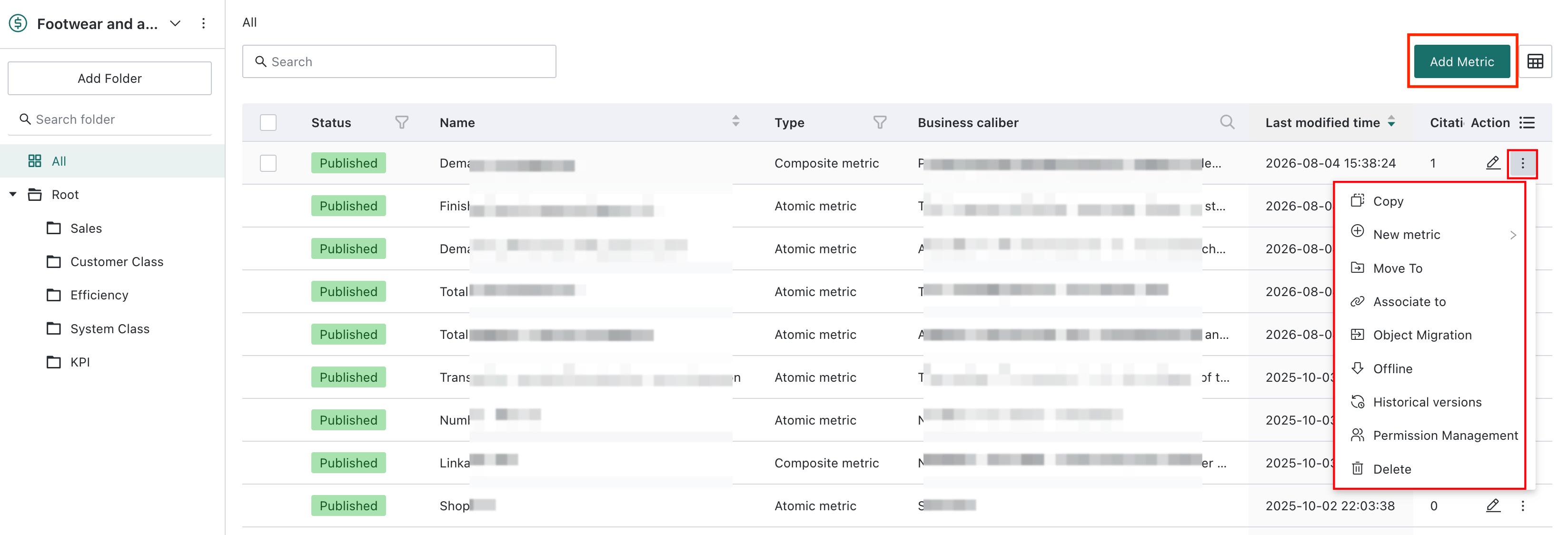
The metric list method provides rich metric information display, such as calculation caliber, business caliber, etc. On the metric topic page, click "New Metric" in the upper right corner, and select the corresponding metric type in the pop-up new metric window to start creating metrics. The operation bar of the metric list can copy metrics, create metrics, move, manage permissions, and delete. After checking multiple metrics, batch deletion can be performed. The deletion logic is consistent with the batch deletion of ordinary cards.
Batch Export of Atomic Metrics
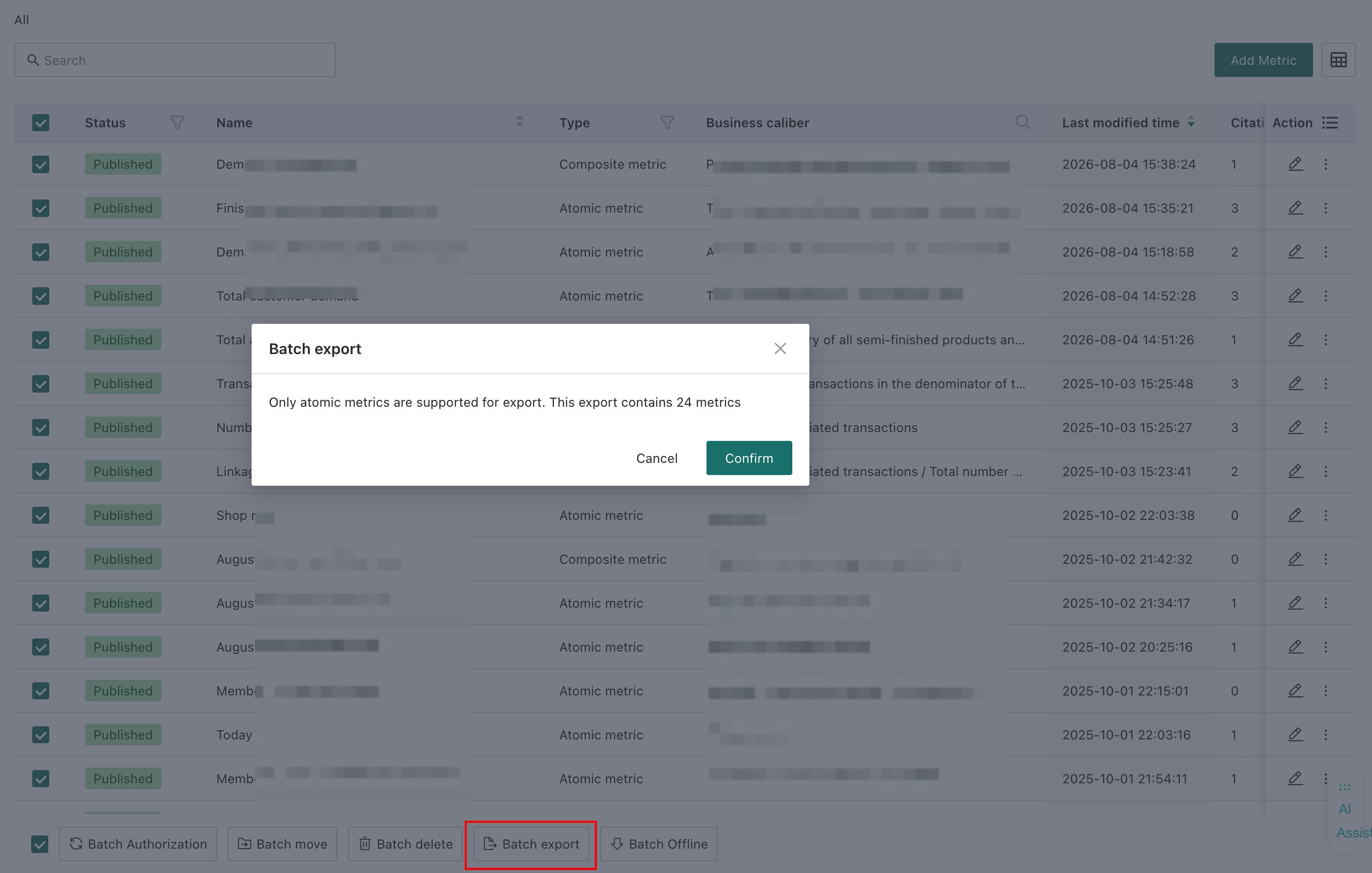
Check the metrics to be exported. If the batch of selected metrics includes atomic metrics, the "Batch Export" button will be displayed. After clicking, the number of atomic metrics exported this time will pop up. After confirming, click "OK".
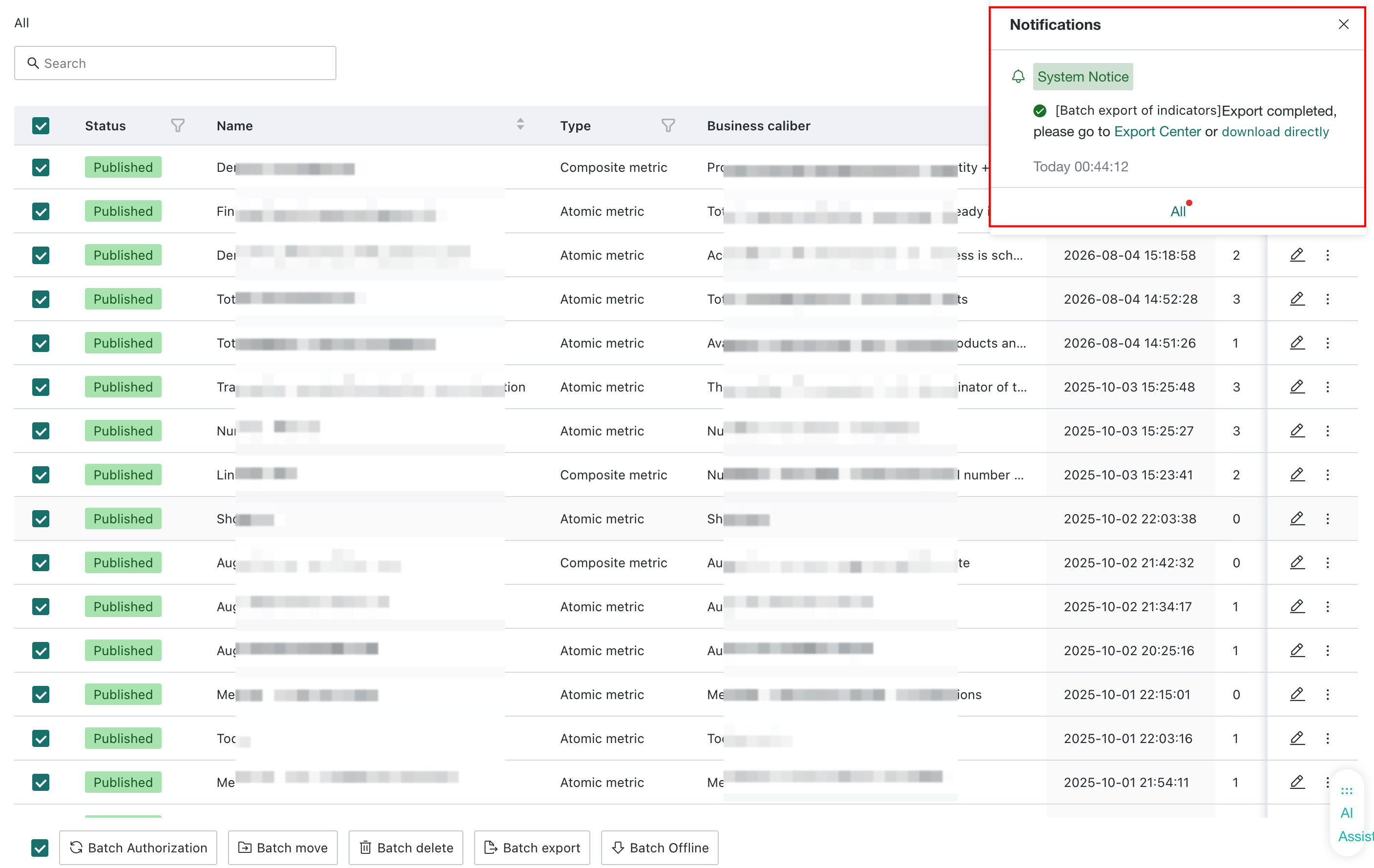
Export as Excel format.
- Only atomic metrics with edit permissions can be exported.
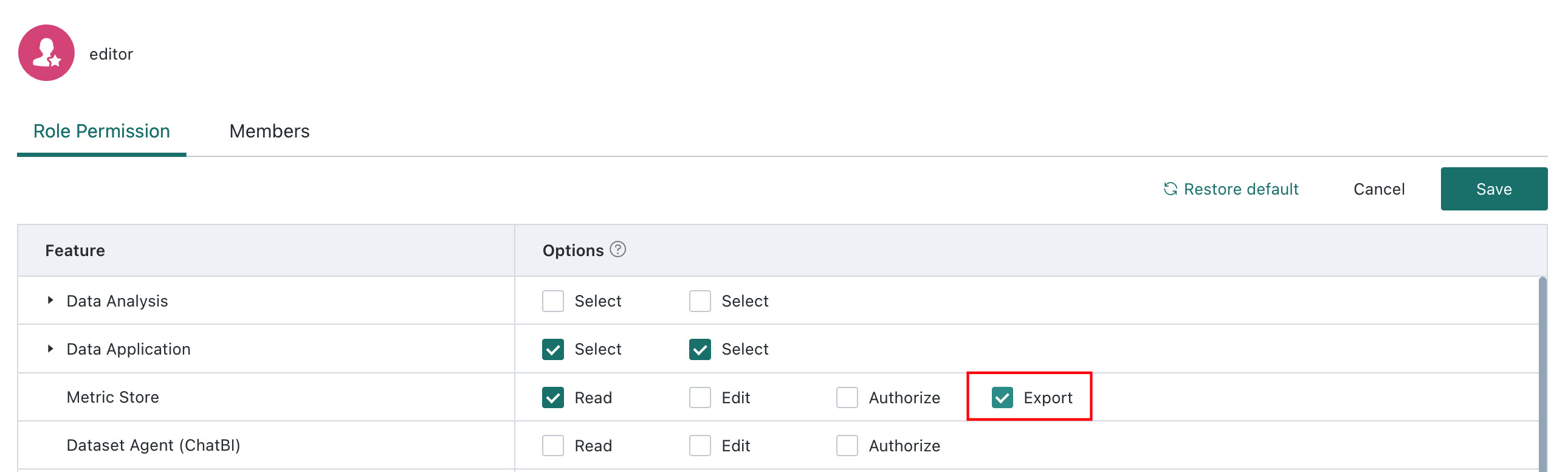
- If there is no "Batch Export" button after checking atomic metrics, please go to "Management Center > Role" page to check whether the current role has enabled the "Export" permission of the Metric Center. Ordinary users have export permissions by default.
Metric Diagram
The metric diagram method provides instant rough preview capability of basic information such as metric values and data distribution, helping users quickly understand macro information related to metrics.
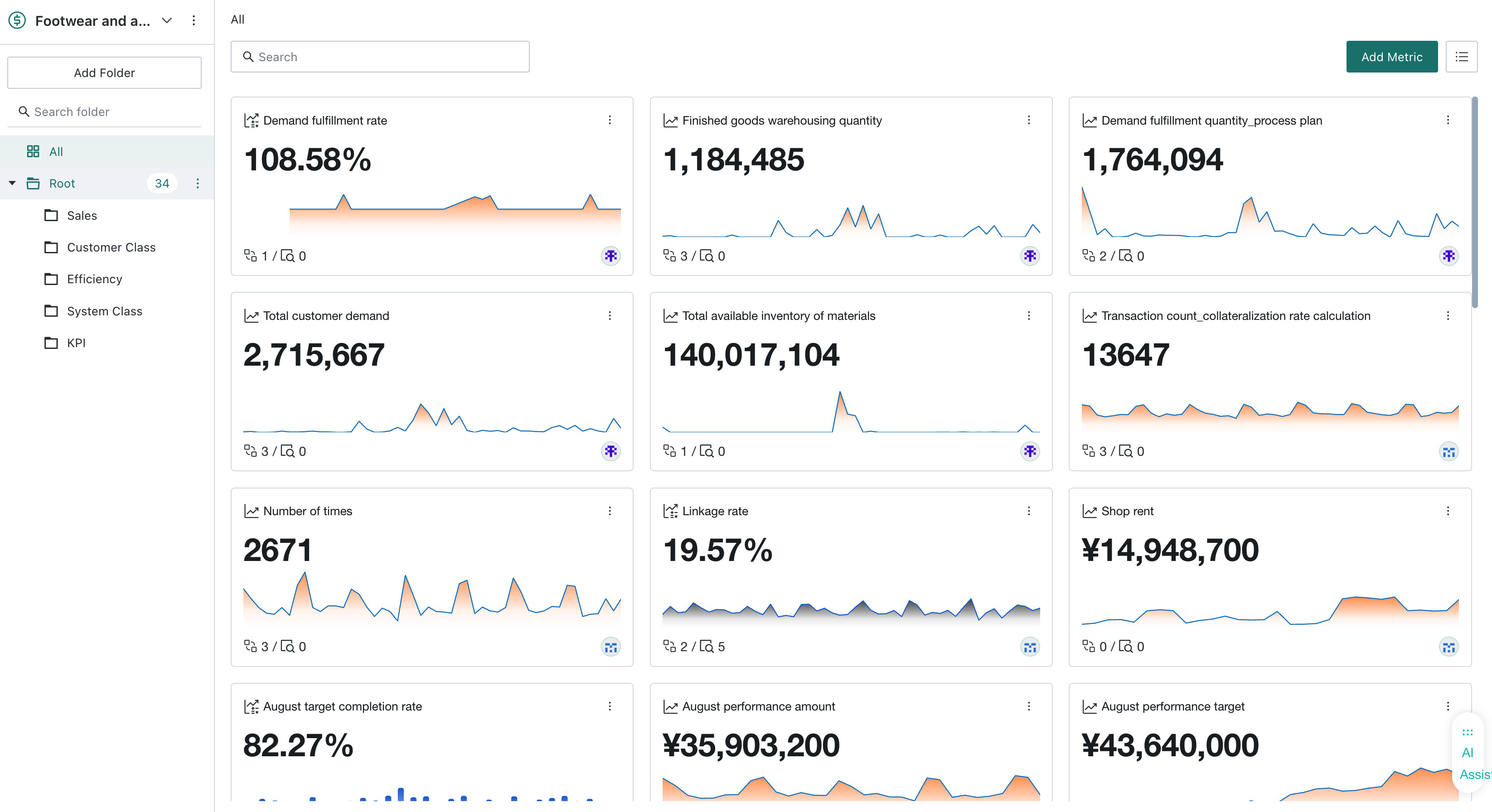
Metric Details
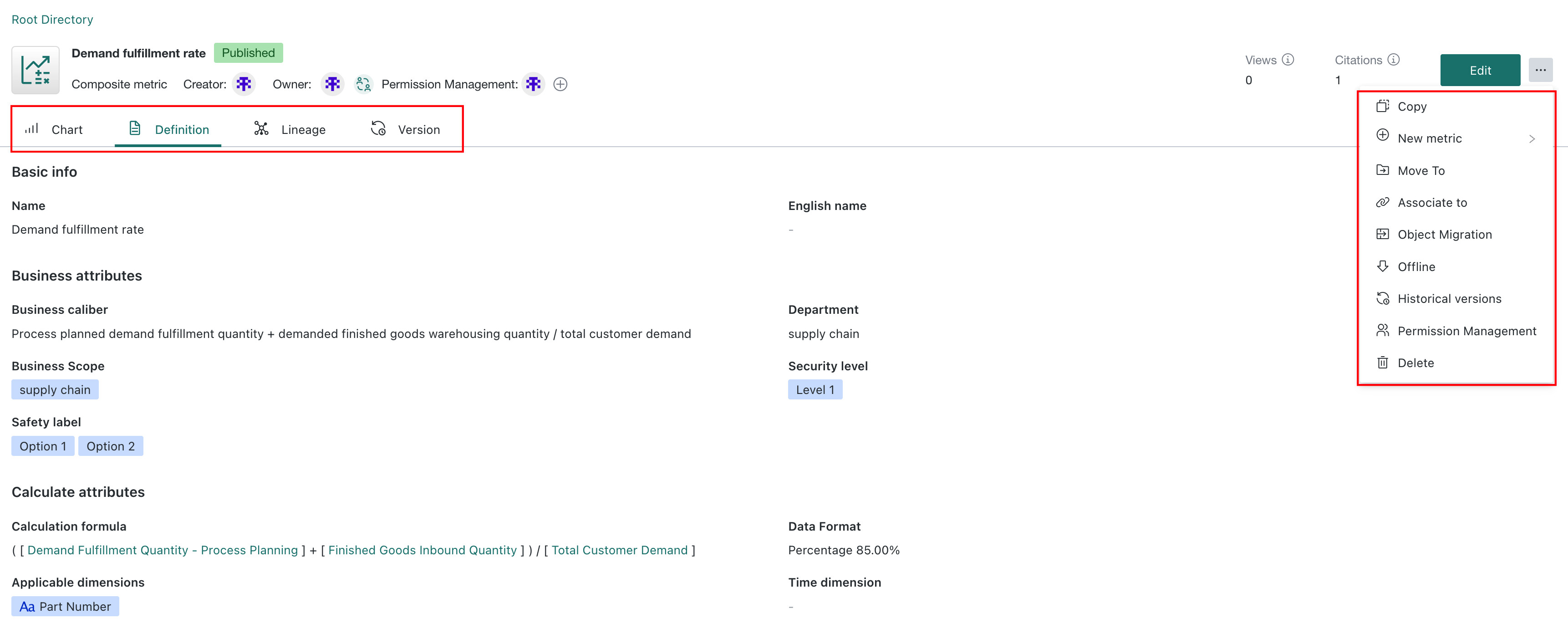
Metric details provide the ability to view the basic information of metric definition and lineage, and support operations such as copying, creating metrics, moving, managing permissions, deleting, and transferring owners.
Lineage
Resource Lineage
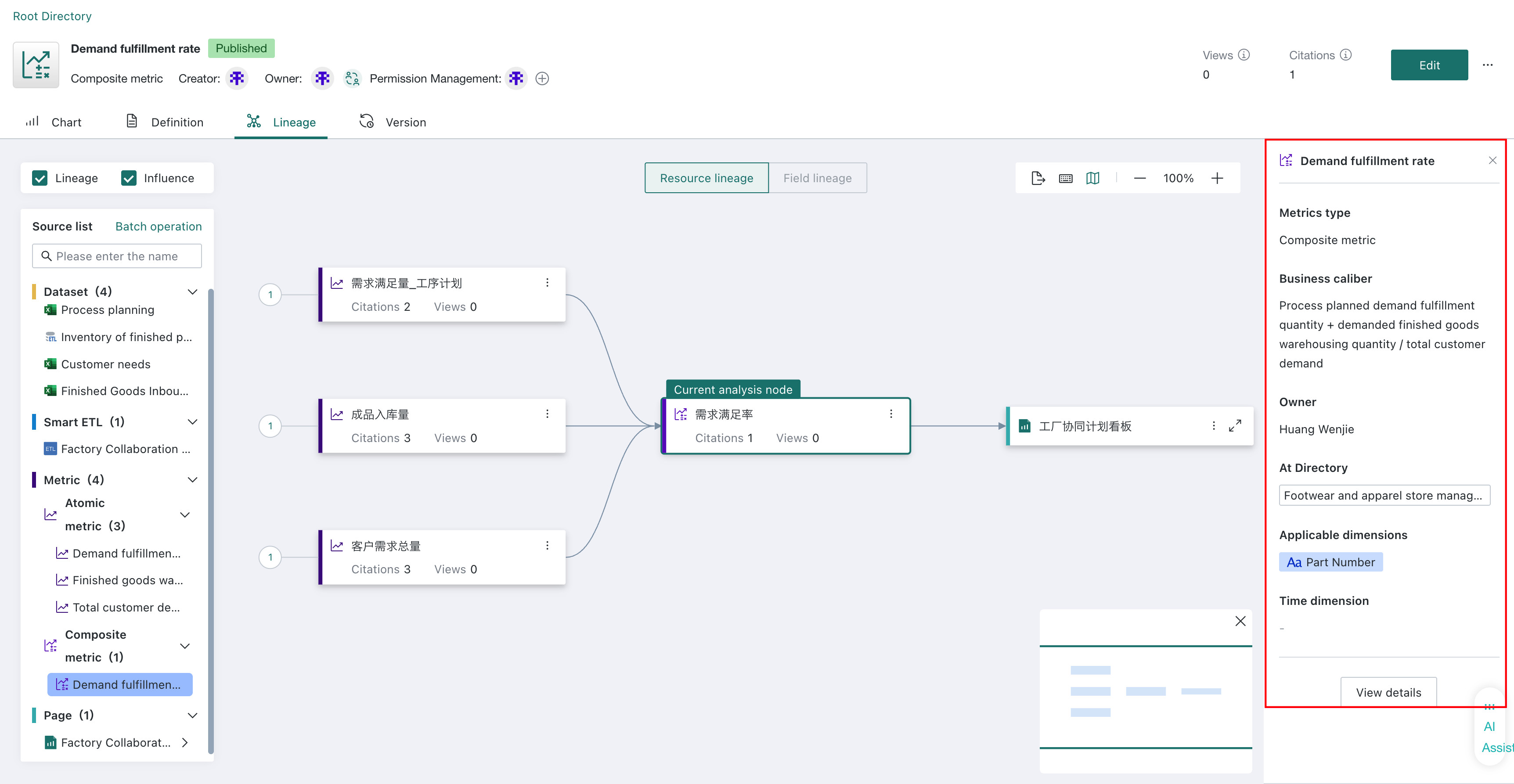
Metric resource lineage is integrated with the resource lineage of datasets, cards, and pages, using a set of resource lineage systems. On the metric detail page, click "Lineage > Resource Lineage" to view the upstream and downstream resource dependencies of metrics.
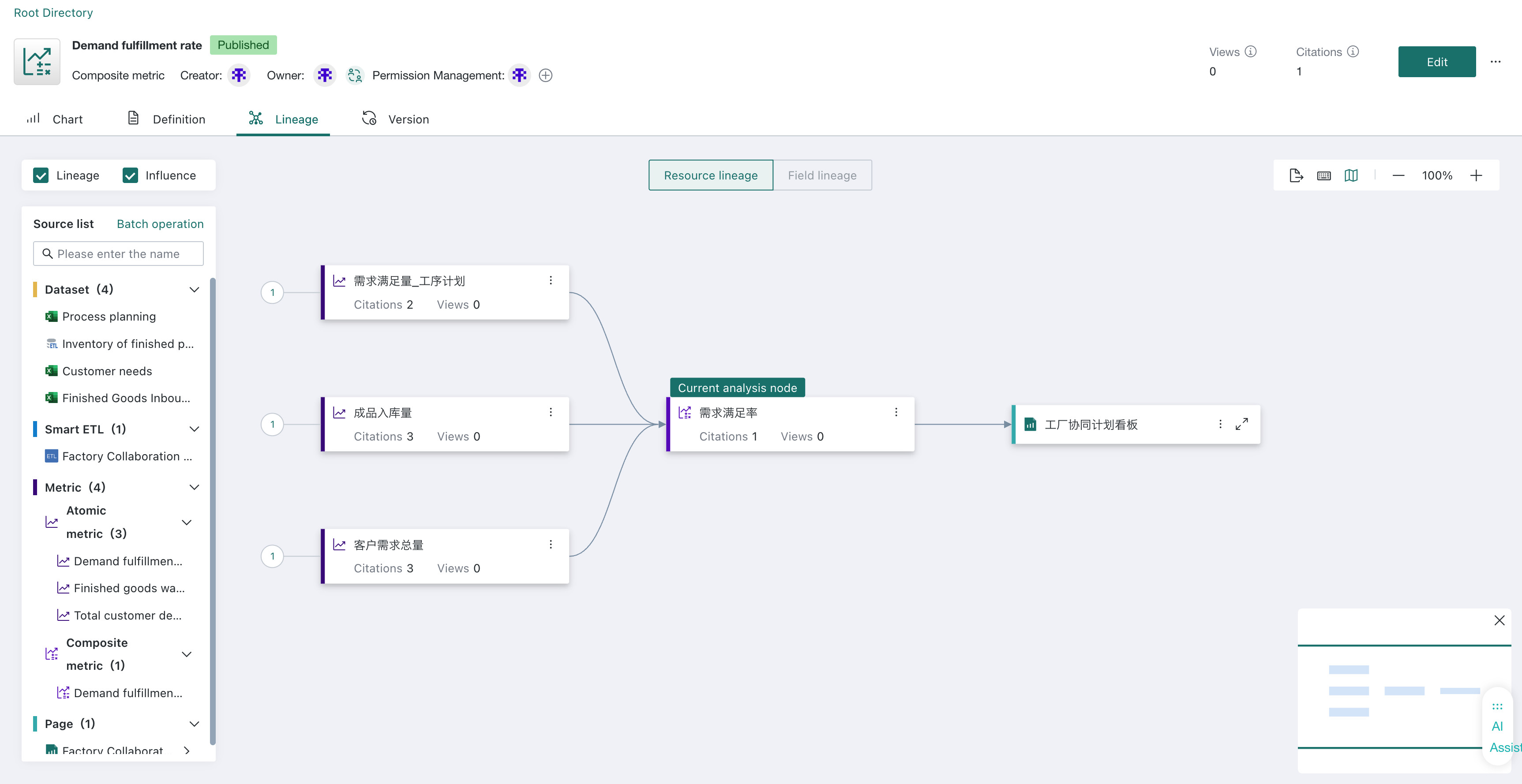
-
Metrics are divided into atomic metrics, derived metrics, and composite metrics, and different metric types are identified by different icons in the lineage diagram.
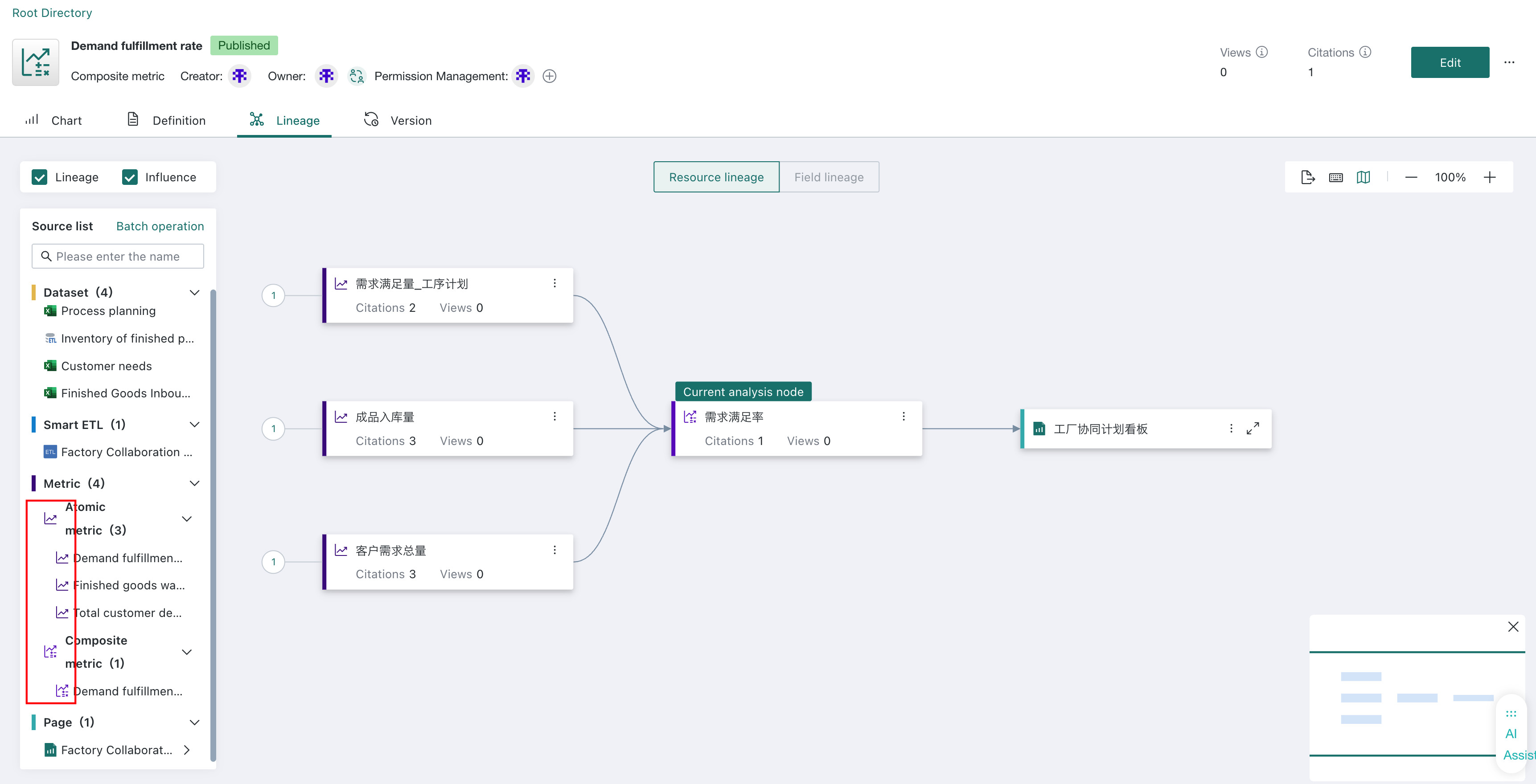
-
Click any resource in the lineage diagram to display the resource details on the right side.
-
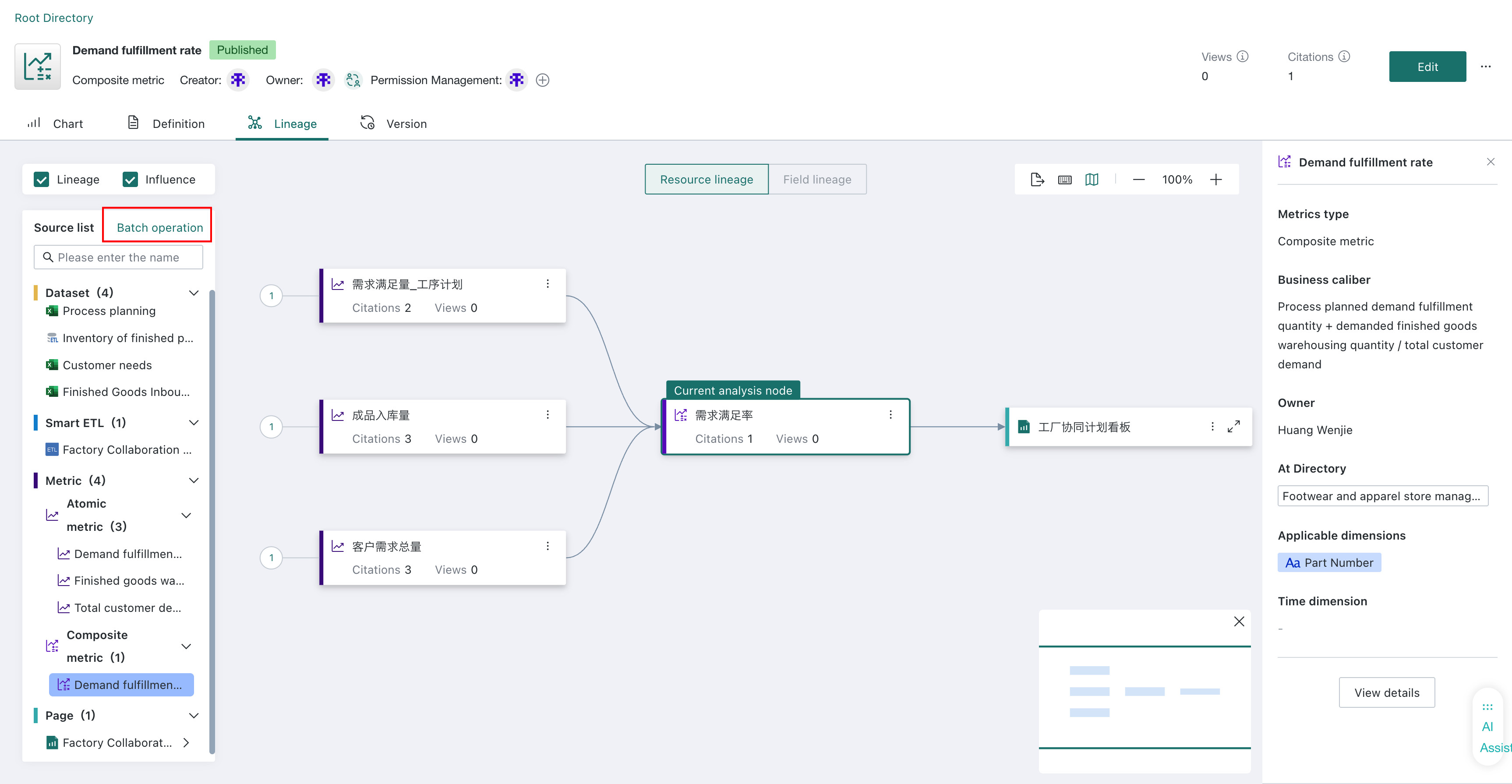
The metric list supports batch deletion operations. The deletion logic is consistent with the batch deletion of ordinary cards. Click "Batch Operation", check the metrics to be deleted and click "Batch Delete", then confirm to complete the deletion.
Note- Only metrics in offline status are supported for deletion
- If a metric is referenced by other composite metrics, derived metrics, or cards, it cannot be deleted
Field Lineage
Metric field lineage is integrated with the field lineage of dataset BI resources, using a set of field lineage systems. On the metric detail page, click "Lineage > Field Lineage", and check the fields that need lineage analysis in the "Field List" tab to display the upstream dataset field lineage of that metric, helping users trace the specific data fields on which the metric calculation depends, facilitating data governance and impact analysis.
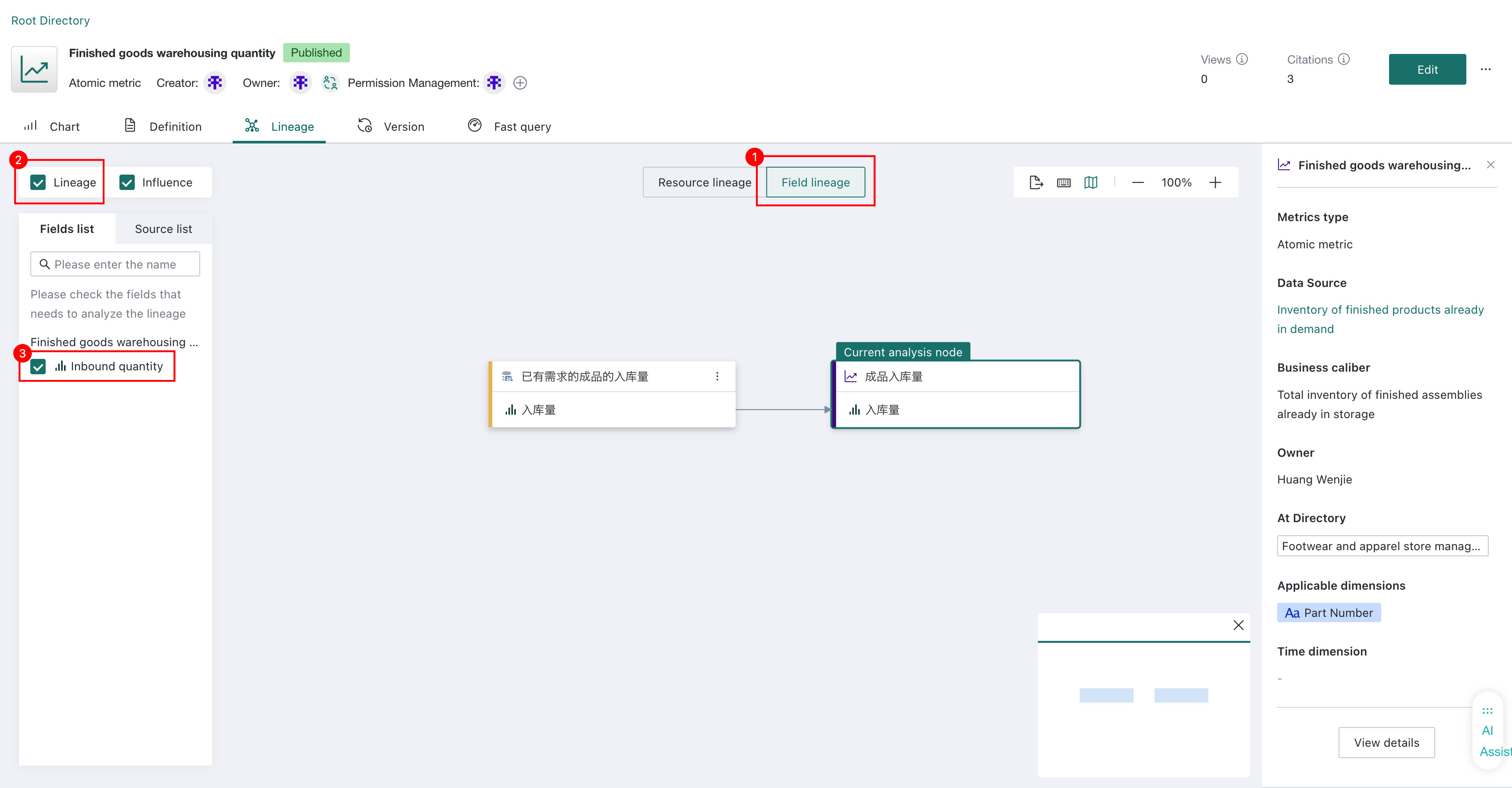
- Only when the analysis object is a dataset, ordinary card, or atomic metric, the upstream can directly point to the dataset field, and only the fields applied in the metric definition are displayed.
- Composite metrics and derived metrics do not support field lineage.
Batch Import
Fill in according to the [Batch Import Metric Template](../../../file/bi/Metric Batch Import Template.xlsx). After filling, upload the file and click "Import".
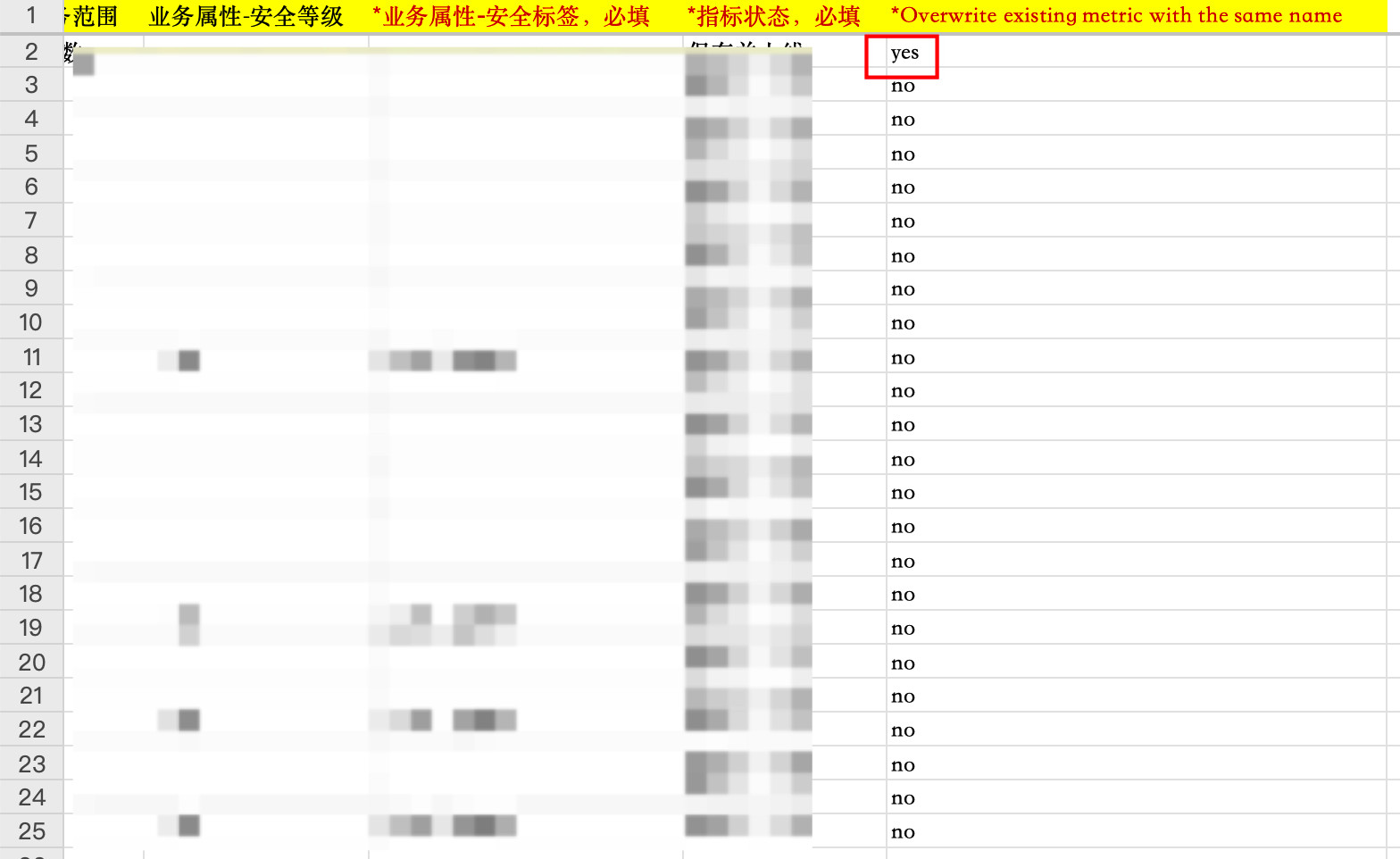
The "Overwrite existing metric with the same name" column must be filled in. If yes is selected, the import can succeed when there is a metric with the same name, and the latest metric will overwrite the original metric; if no is selected, the import will fail when there is a metric with the same name.
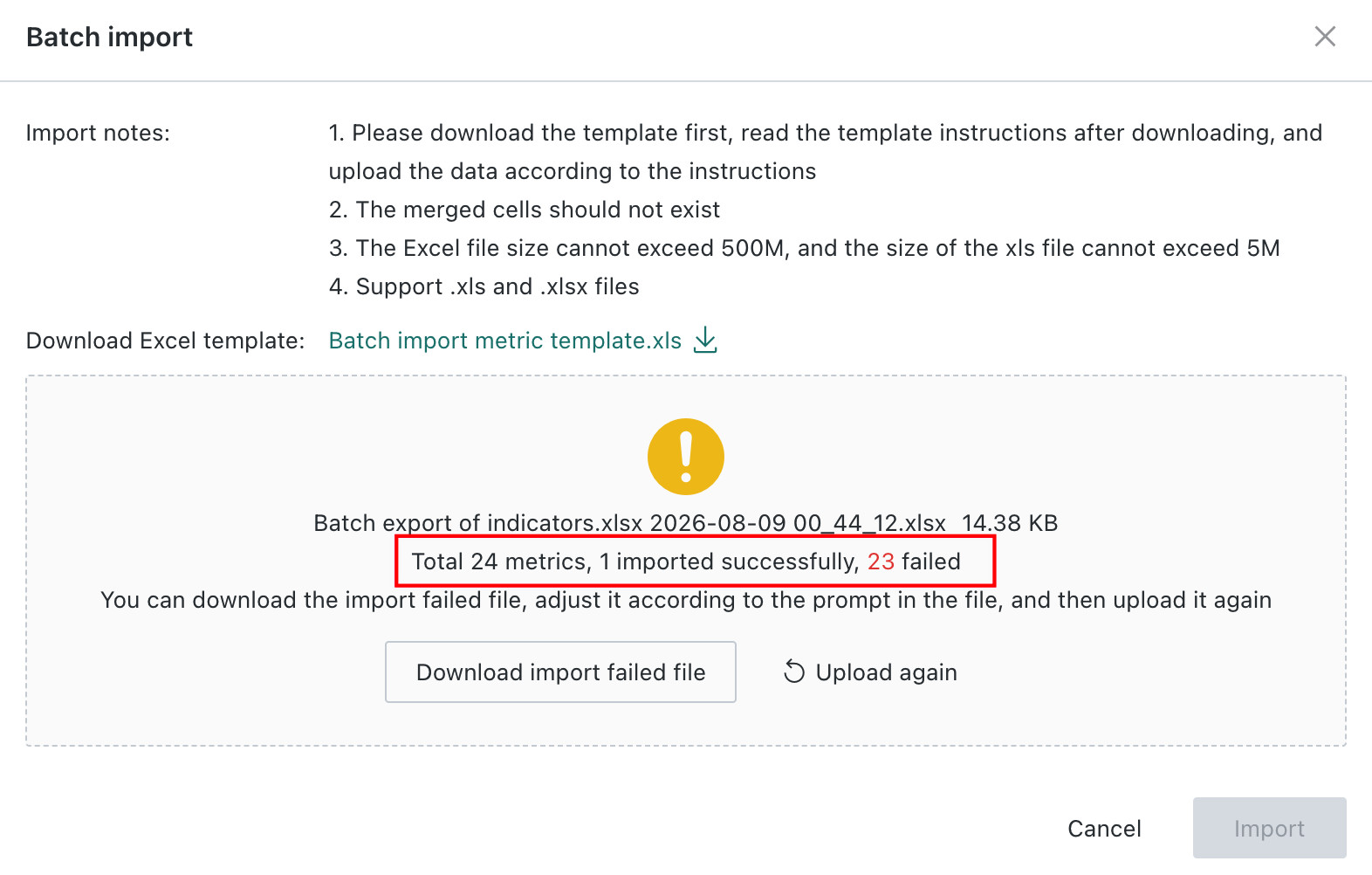
As shown in the figure below, the 25 rows of metrics in the figure all have metrics with the same name in the Metric Center. At this time, only 1 row selects "Yes" for "Overwrite existing metric with the same name". After batch import, only that metric is successfully imported, and the remaining metrics with "No" selection fail to import.
Metric Online/Offline and Version Management
Guandata provides metric online/offline and historical version management capabilities, and supports restoration of historical versions. After a new version is released and launched, the old version automatically becomes a historical version. Online/offline is an indispensable part of achieving standardized and unified metric management. Through centralized management and standardized metric definitions, it ensures that various departments and teams within the enterprise use consistent measurement standards, thereby improving the accuracy and efficiency of decision-making.
Metric Status Description
After a metric is launched, it becomes an online status. The status logic is described as follows:
- Metrics can only be used by dashboards after being launched, and only online metrics can be selected in dashboards.
- Metrics can only be used by derived metrics and composite metrics after being launched, and only online metrics can be selected.
- If a metric is referenced by a composite/derived metric/card, it cannot be taken offline.
Metric Version Description
The metric detail page supports viewing version content, supports multiple historical versions, and supports drafts. Each metric can have at most one draft. Each time a version is launched, the system assigns a new version number to the current version.
Metric Permission Management
Metric permissions are jointly determined by topic roles, metric roles, and Metric Center role operation permissions. When users access or operate metrics, they need to simultaneously meet the corresponding topic role, metric role, and Metric Center role operation permissions. For complete permission rules, see Final Permission Judgment Rules.