Slides
Slides Overview
Slides allow Guandata to combine multiple pages into one slideshow for presentations and reporting, meeting large-screen presentation and reporting needs.
Slides Use Cases
Reporting Data in Meetings
In enterprise operations and management, teams often use meetings at different levels for data analysis, reporting, and strategy discussions. Guandata can organize multiple data dashboards into a slideshow, helping users prepare fully for reports. Users can turn pages with the keyboard arrow keys or a presentation clicker, making reporting more convenient.
Dynamic Data Display on External Screens
In daily business work, some business data needs to be displayed dynamically to reduce information gaps. With Guandata Slides, users can configure automatic page turning for data pages, such as every 5 seconds, and cast the slideshow to a TV or another screen for dynamic display. This helps different departments present work results or business performance.
Slides Workflow
Create a Slide
-
Click the app launcher in the upper-right corner of the top navigation bar and select
Slidesto open the Slides settings page.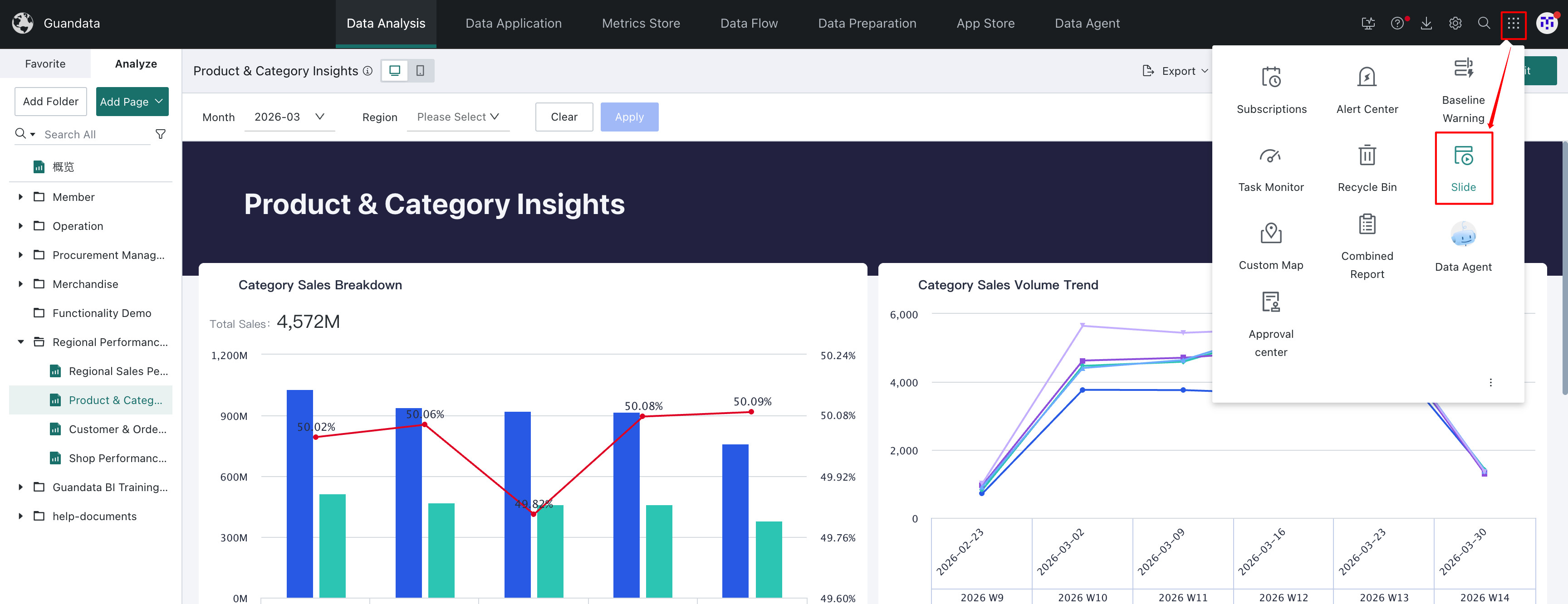
-
Click
Create Slidein the upper-right corner of the Slides settings page. TheCreate Slidesettings pane appears.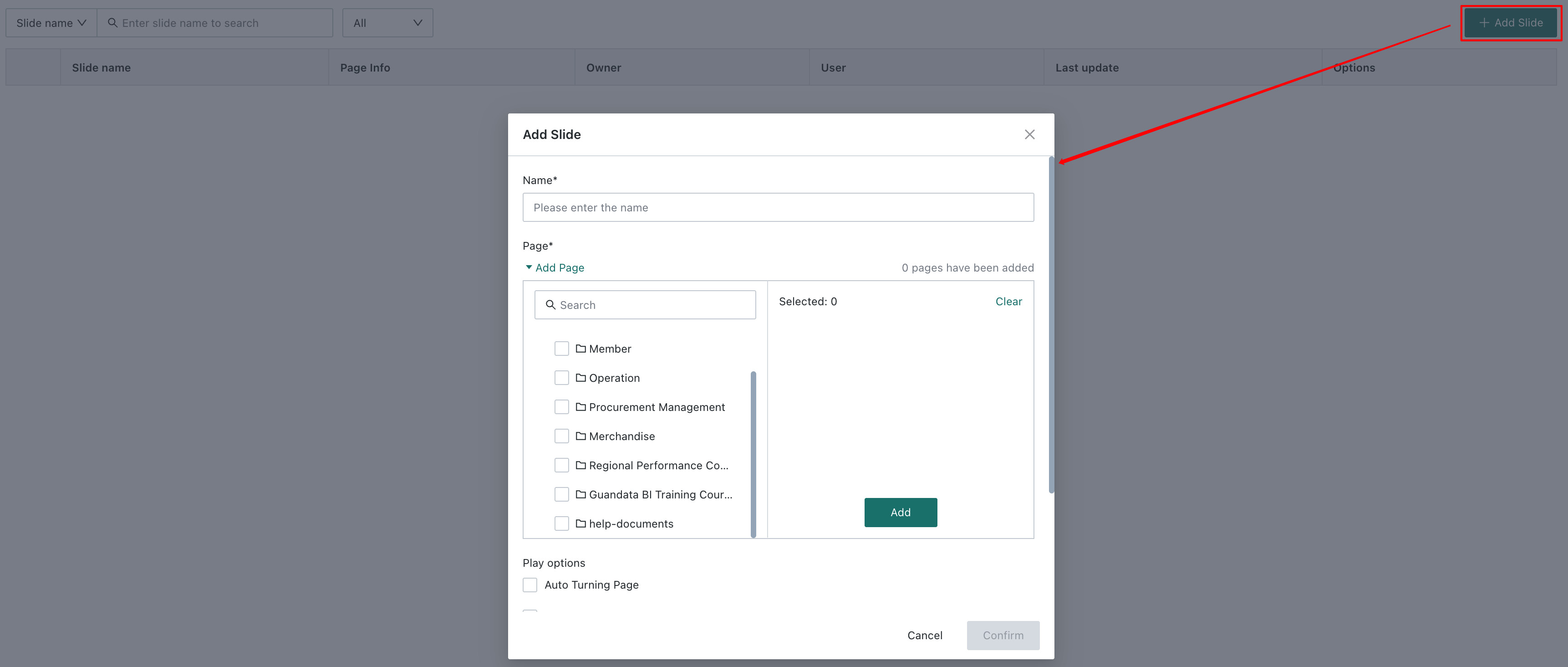
Configure a Slide
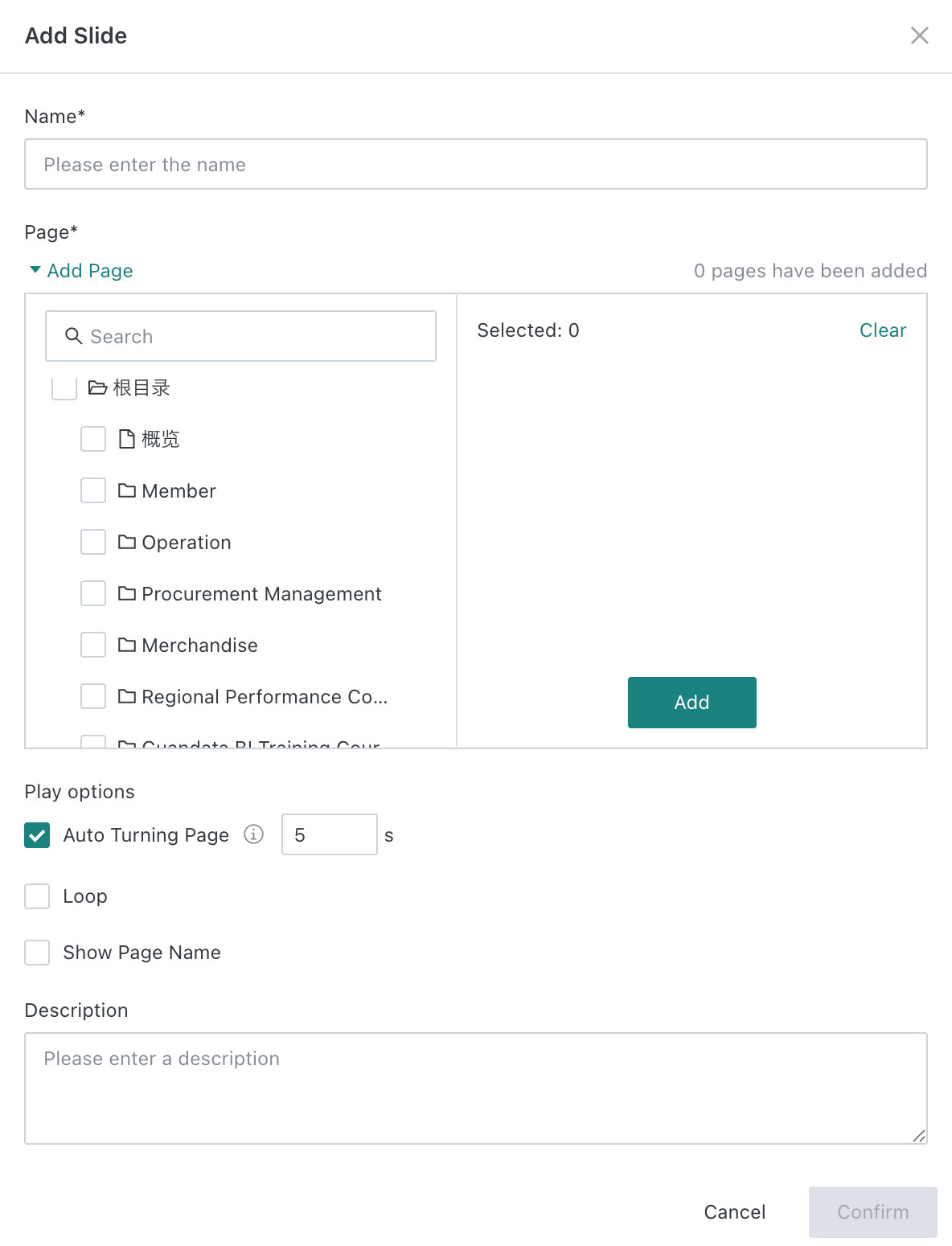
Enter a slide name, add one or more pages, and configure playback options. After the configuration is complete, click OK to finish creating the slide.
Play a Slide
After creation, you can view created slides in the slide list. On this page, you can view a slide, add owners and users, and perform actions such as play, edit, and delete.

- Play a slide: Click
Playto cast and display the slide on a large screen. The same page supports vertical scrolling, while different pages support horizontal switching. - Pause slide playback: During slide playback, you can pause playback when interaction is needed, and resume playback after the interaction is complete. Click the left mouse button to pause playback, then click again after the interaction to continue playback.