Card Dataset
Overview
Guandata BI supports creating datasets from Card results, which are the data produced after a user performs visual analysis with a Card on a dashboard. For example, after completing preliminary visual analysis, if the user identifies potentially valuable trends or anomalous data points in a Card, the current Card result can be saved as a Card Dataset for deeper data mining, model building, or further exploratory analysis.
User Guide
Create a Card Dataset
Entry 1: Create from a Dashboard Page
-
Entry point:
Dashboard Page > Card > ... in the upper-right corner > Generate Card Dataset.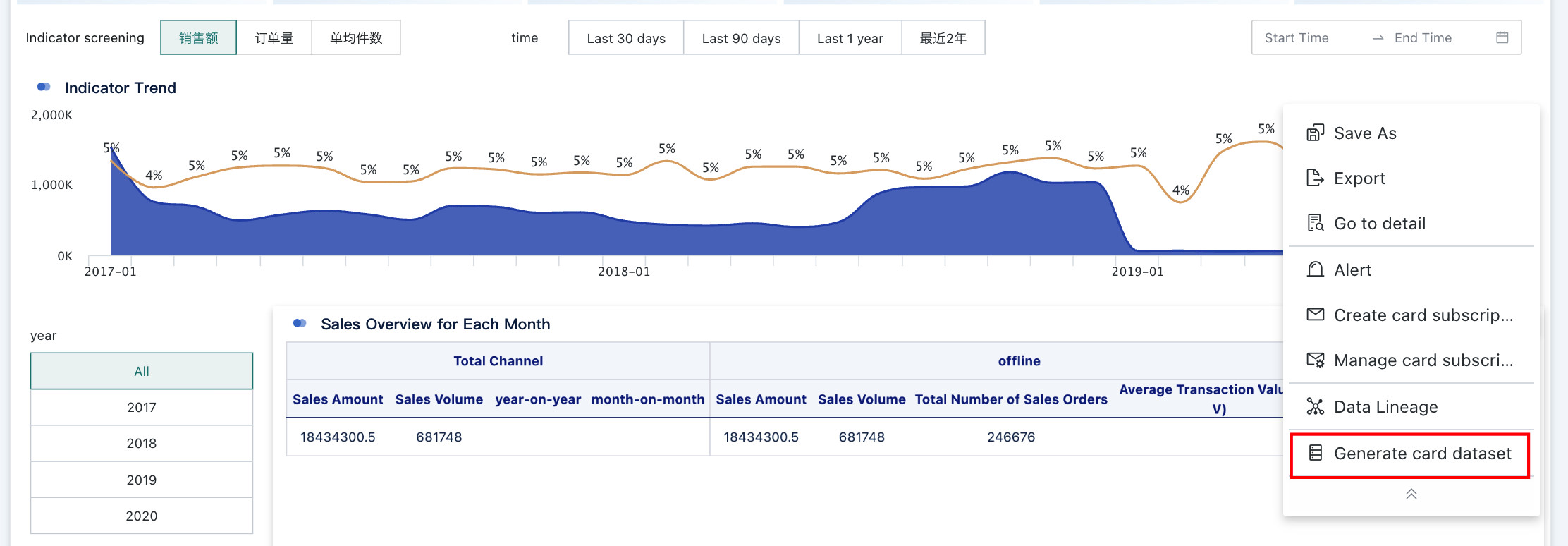
-
On the dataset information configuration page, users can review the data and modify the generated dataset name, storage path, which defaults to the system root directory, and description. Users can also click
Smart Detectionto identify whether the dataset contains sensitive fields and selectMark as Sensitive Dataset. For more information, see Data Masking.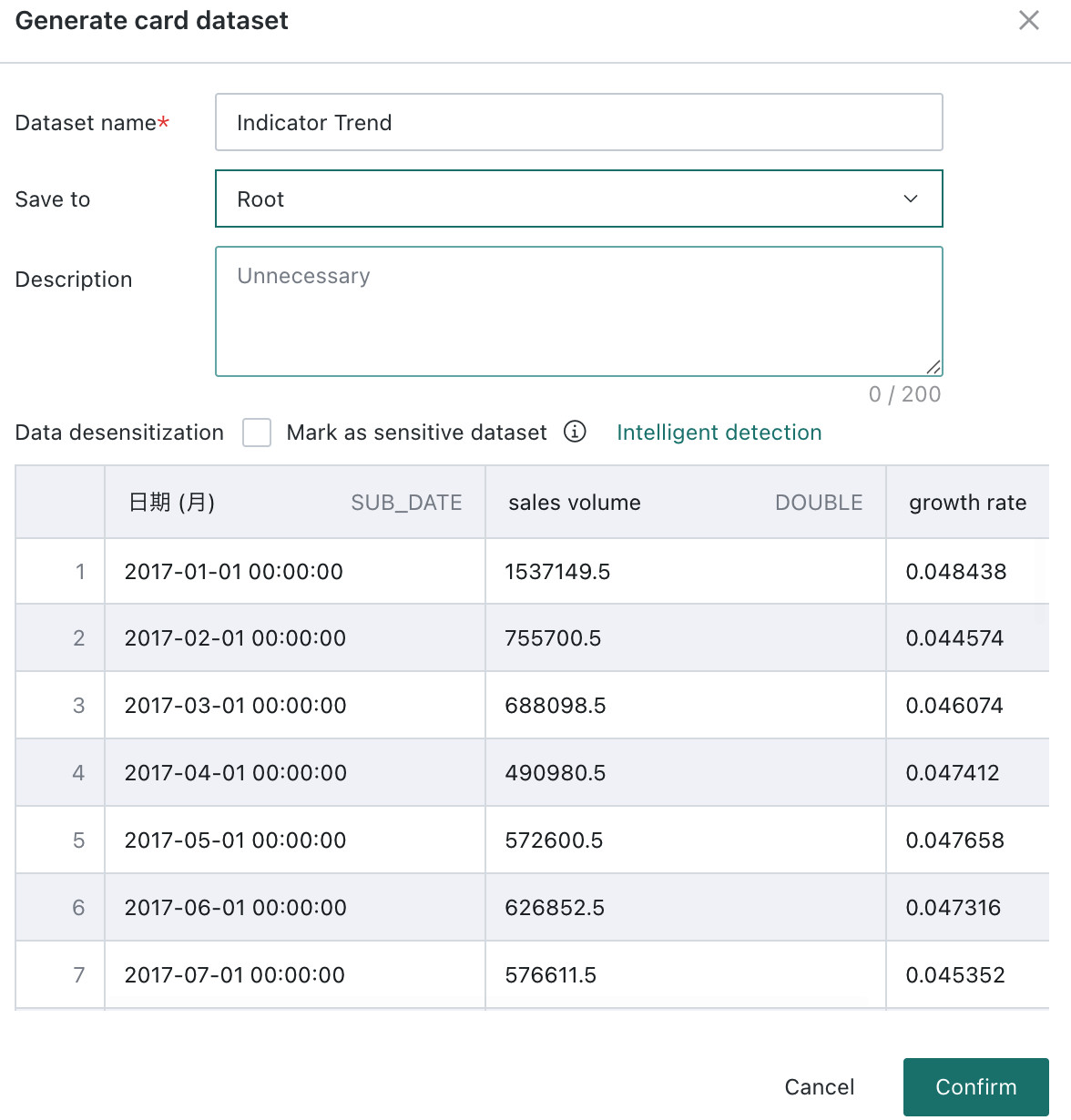
-
After confirming the information, click
Confirmto create the dataset.
Entry 2: Create from the Data Preparation Page
-
Entry point:
Data Preparation > Datasets > New Dataset > Application > Card Dataset.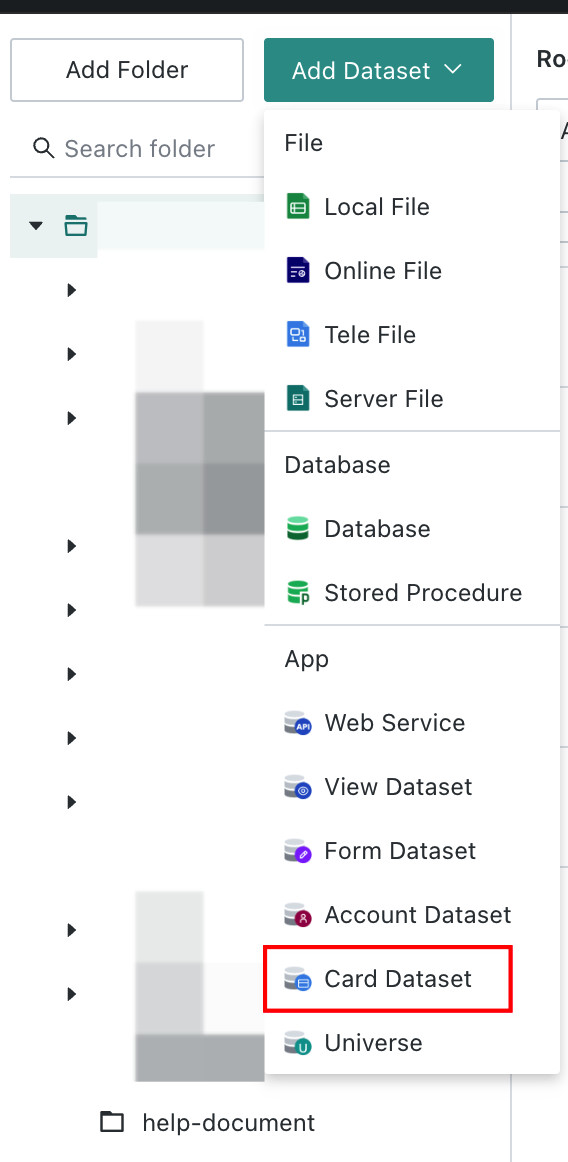
-
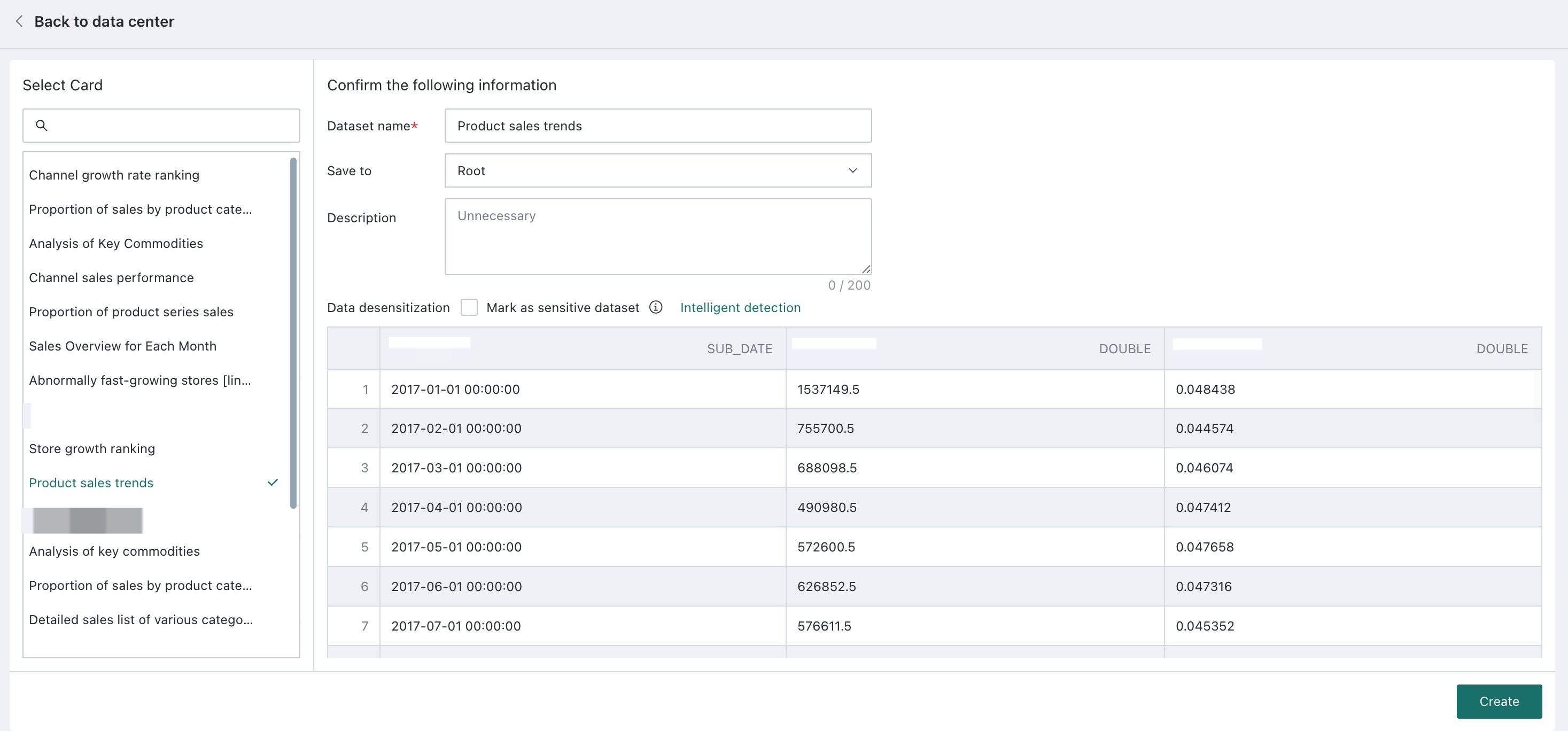
On the Card Dataset configuration page, first select the target Card from the list on the left, then confirm the Card data table information on the right and enter the dataset name, storage path, and description as needed.
-
Users can also click
Smart Detectionto identify sensitive fields in the dataset and selectMark as Sensitive Dataset. For more information, see Data Masking.NoteUsers can select only Cards for which they have owner permission.
-
After confirming the information, click
Confirm Creationto create the dataset.
Manage the Created Dataset
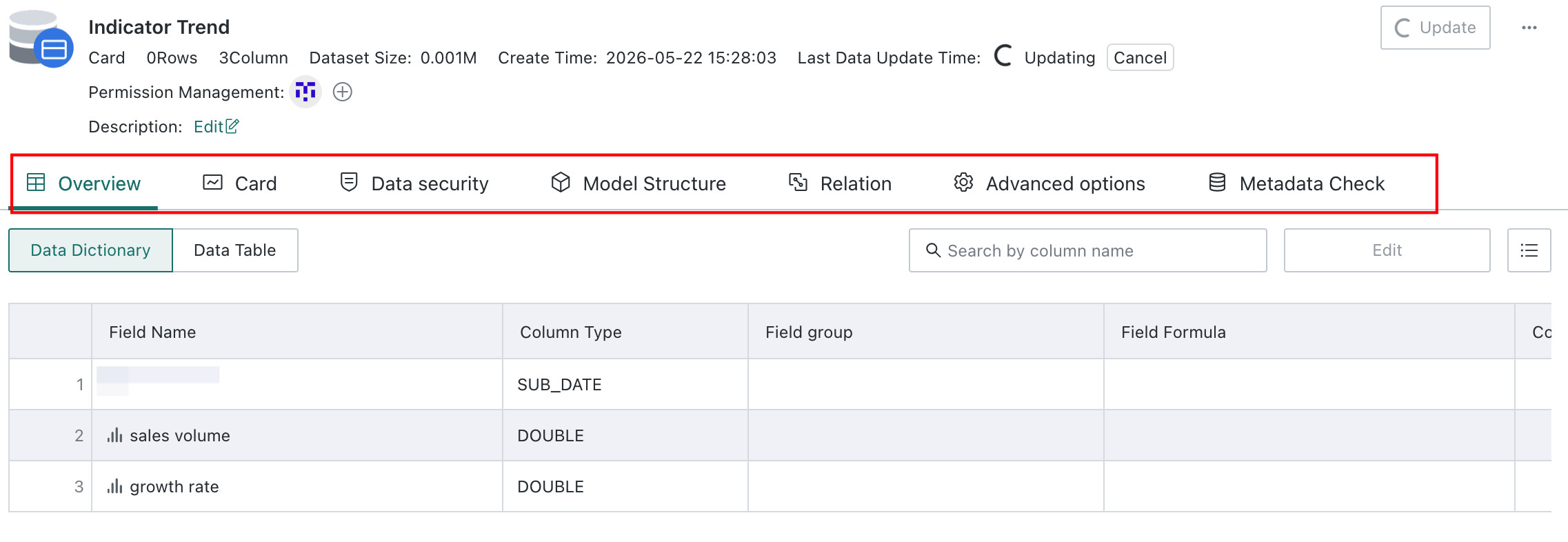
The created Card Dataset is saved in the designated location in the data center. Click the dataset to open its details page, where you can view the overview, related Cards, data security information, and edit configuration items on each page.
See Dataset Management for details Dataset Management Overview.