E-mail Service
Overview
Email Service is the global switch and configuration center for sending outbound emails from the system. By integrating with a third-party SMTP server, it ensures reliable delivery of system notifications, verification emails, and similar messages, making it a key part of user communication and business workflow delivery.
Usage Scenarios
- Card subscriptions, page subscriptions, and alerts
- Task failure notifications and server resource alerts
If you want these subscriptions and alerts to be sent to users by email, you need to configure Email Service in BI.
Steps
- On the
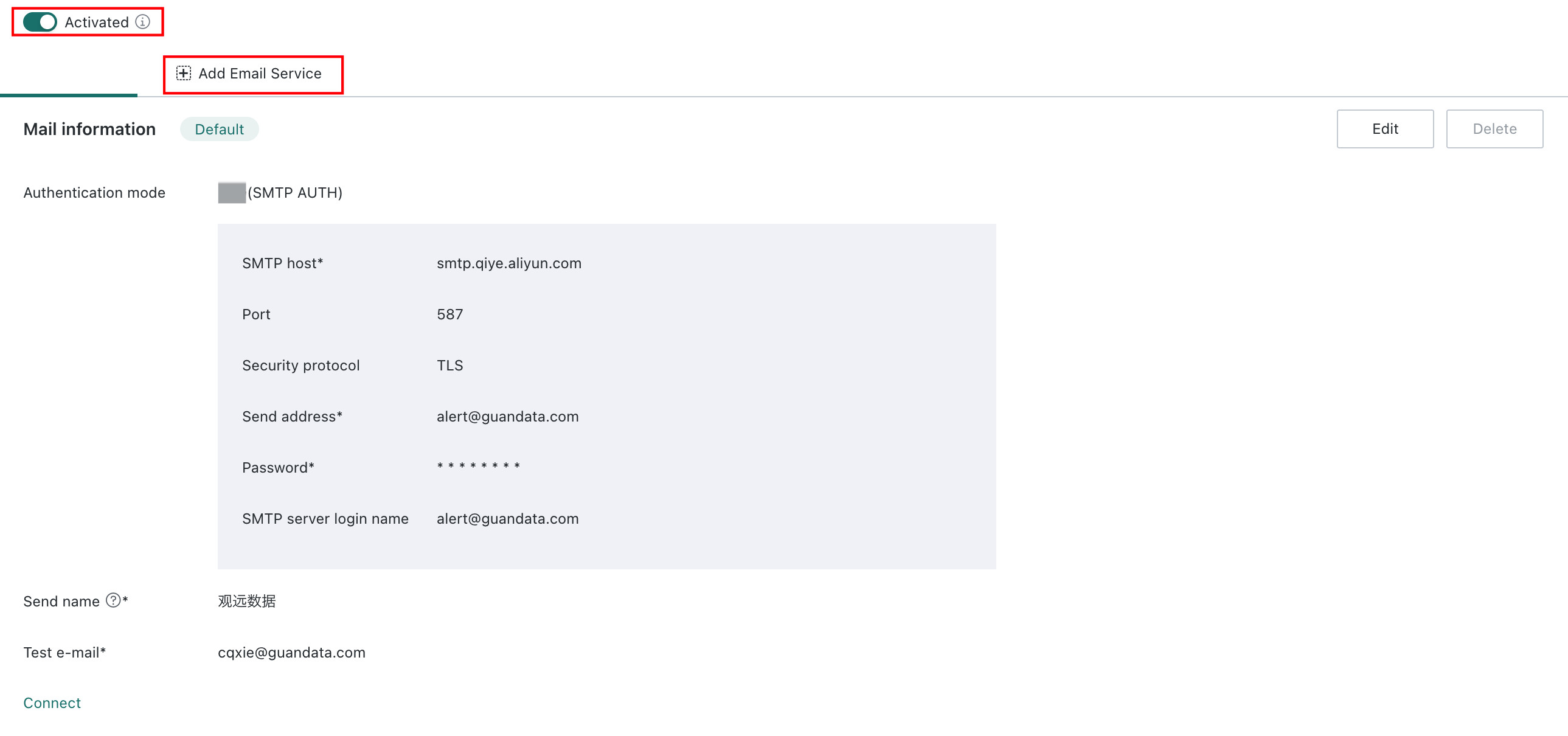
Admin Center > System Integration > Email Servicepage, turn on theEmail Serviceswitch and clickAdd Email Service.
- Choose an authentication method and fill in the email configuration.
-
Authentication Method: Password Authentication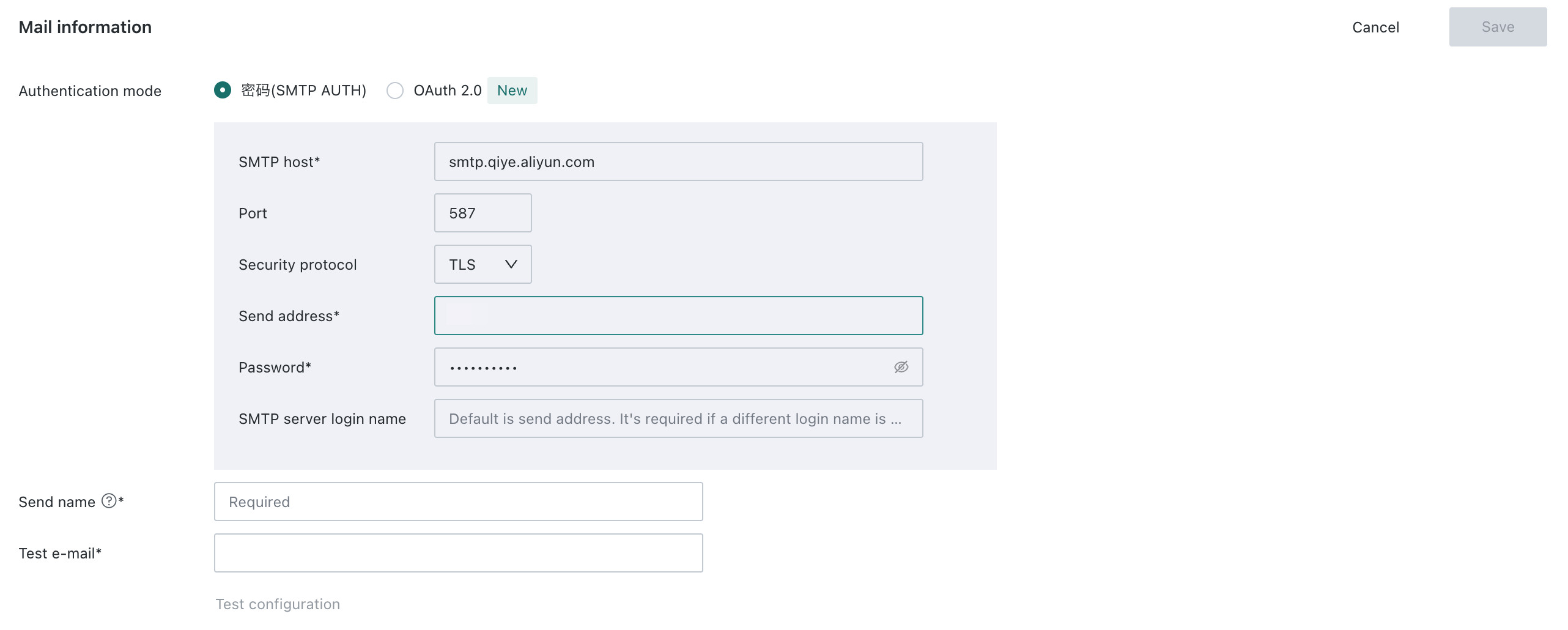
| Configuration Item | Description |
|---|---|
| Mail Server (SMTP) | The SMTP server is the mail-sending server that follows the SMTP protocol |
| Port | Different ports are used depending on the security protocol. Common ports are 25 for no encryption, 465 for SSL, and 587 for TLS |
| Security Protocol | Guandata BI supports None, SSL, and TLS. SSL and TLS are the most common email security protocols and protect email transmission over the Internet. SSL or TLS is recommended |
| Sender Email and Password | It is recommended to use a dedicated mailbox. If the mailbox credentials change, update them manually here |
| SMTP Login Name | In most cases, the sender email address can be used directly |
| Sender Name | The display name shown to recipients, such as Guandata or BI Center. If you use Microsoft Office Exchange, this field may not take effect and the mailbox name in Exchange may be displayed instead |
| Test Email | Used only for connection testing. If the configuration is correct, clicking Test Connection sends a test email to this address |
-
Authentication Method: OAuth 2.0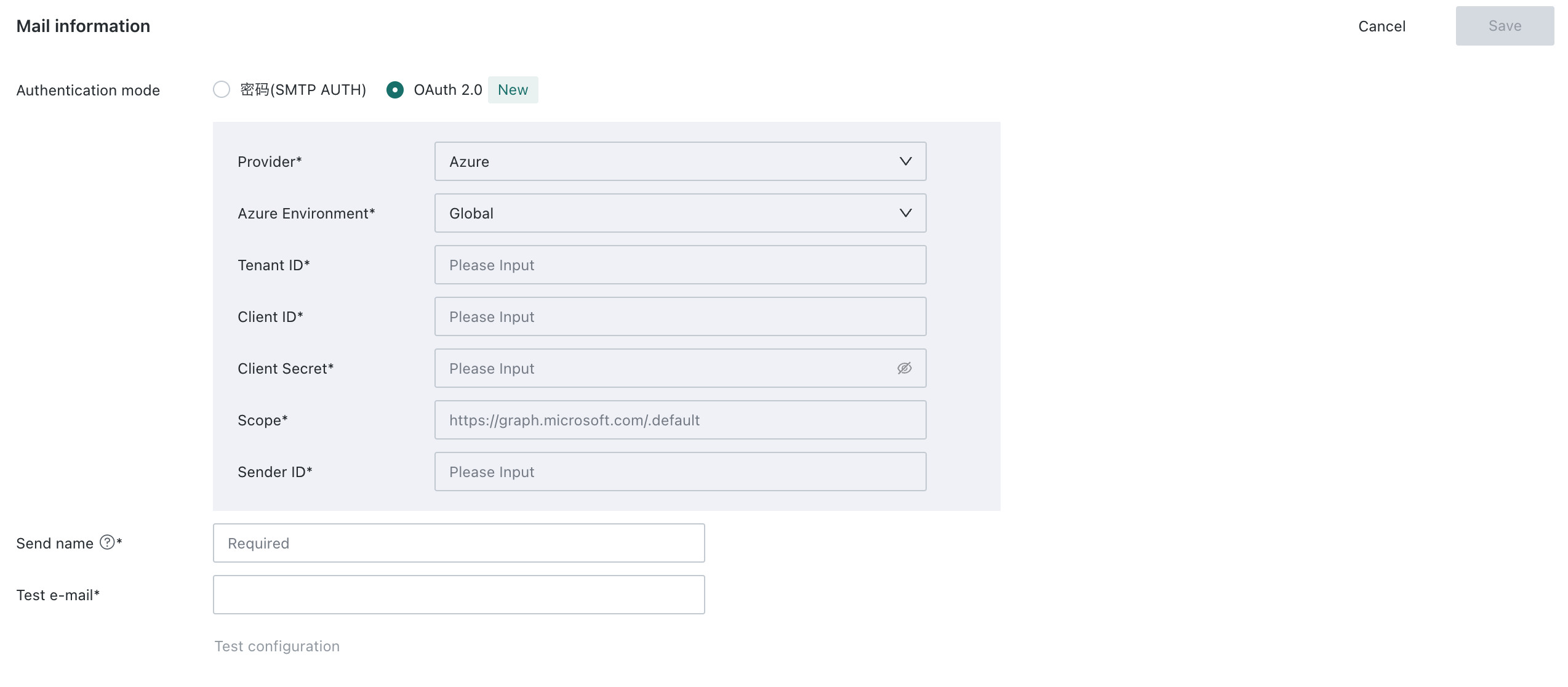
| Configuration Item | Description |
|---|---|
| Provider | Select Azure |
| Azure Cloud Environment | Select Global |
| Tenant ID | Required. Enter the Azure tenant ID |
| Client ID | Required. Enter the Azure application client ID |
| Client Secret | Required. Enter the Azure application client secret |
| Scope | Required. The default value is https://graph.microsoft.com/.default |
| Sender ID | Required. Enter the Object ID or UPN |
| Sender Name | The display name shown to recipients, such as Guandata or BI Center. If you use Microsoft Office Exchange, this field may not take effect and the mailbox name in Exchange may be displayed instead |
| Test Email | Used only for connection testing. If the configuration is correct, clicking Test Connection sends a test email to this address |
-
After the configuration is complete, click
Test Connectionto confirm that the settings are correct. After the test succeeds, you can clickSave.- The
Test Connectionbutton is enabled only after the authorization test is valid and a test email address has been filled in. - The
Savebutton is enabled only after the test succeeds.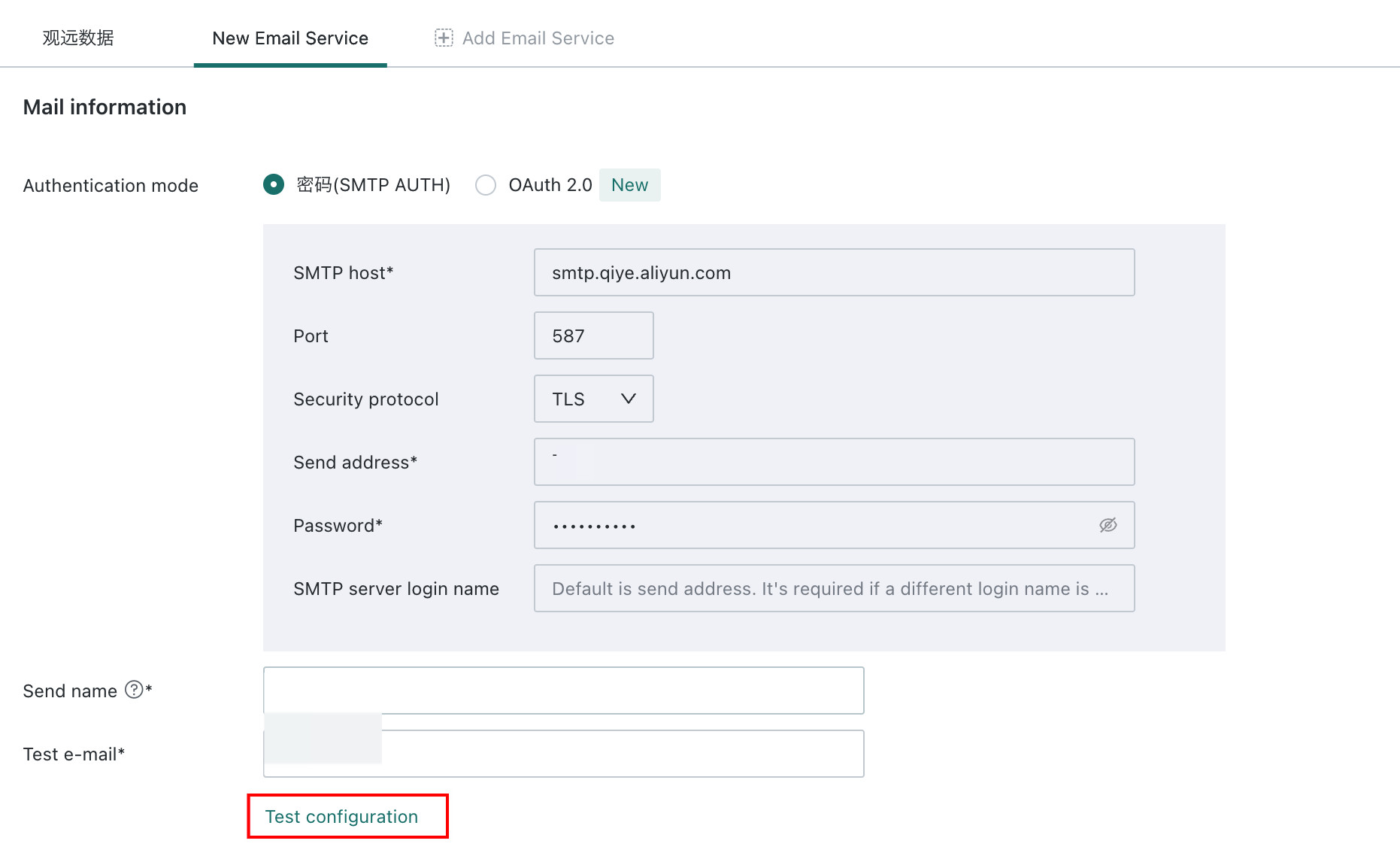
- The
-
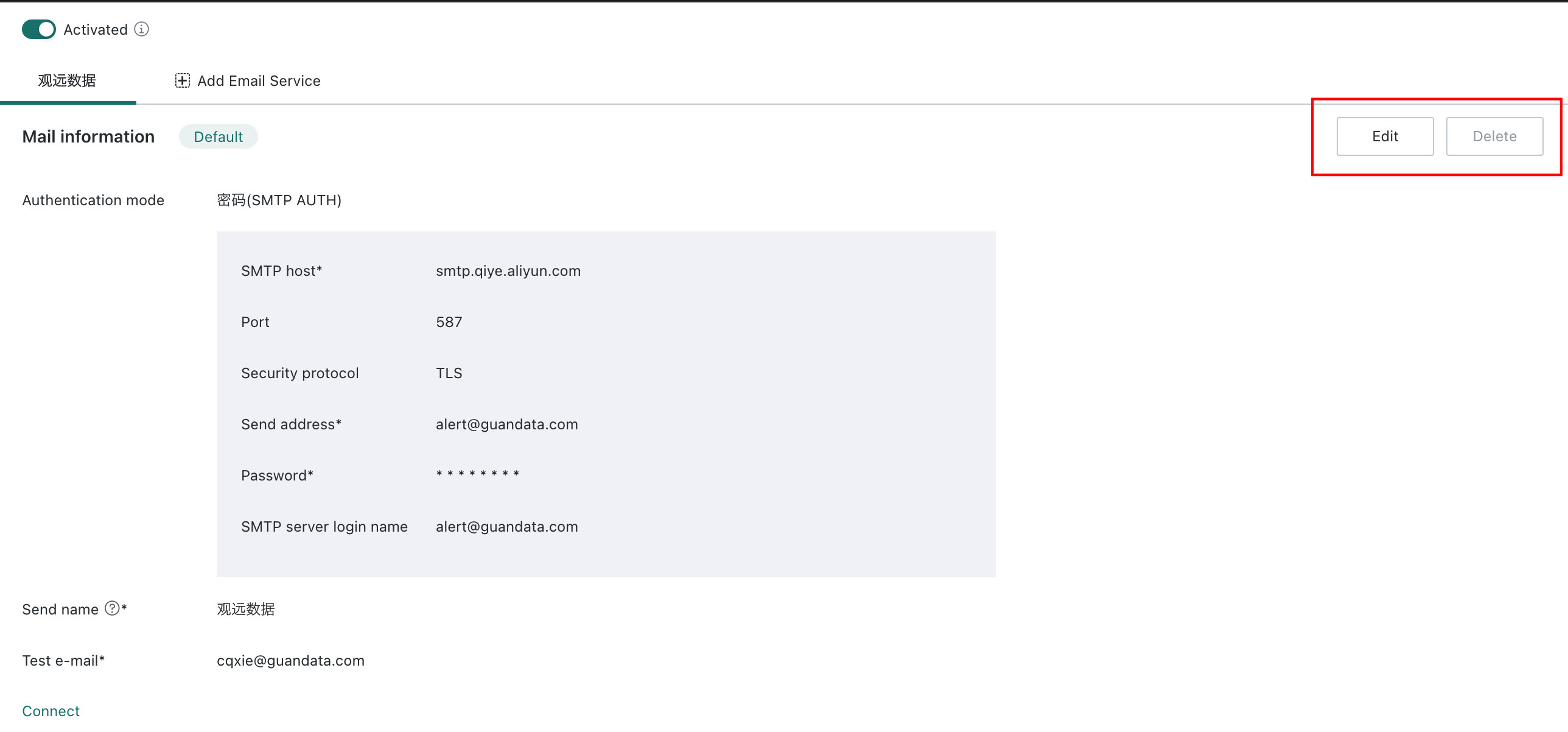
If you later need to modify or delete the mailbox configuration, click
EditorDeletein the upper-right corner.