Notes on Using Conditional Formatting
Background
In a card, users usually configure the overall style of the data in the image through the style panel on the right. For table cards, the table header and table body are configured separately, such as color and font. Conditional formatting, including row rules and column rules, can also be used to highlight data that meets specific conditions. When multiple style-related settings are used, pay attention to their priority and behavior in special cases.
1. Style Priority
- Table header: field header format > header settings > theme style.
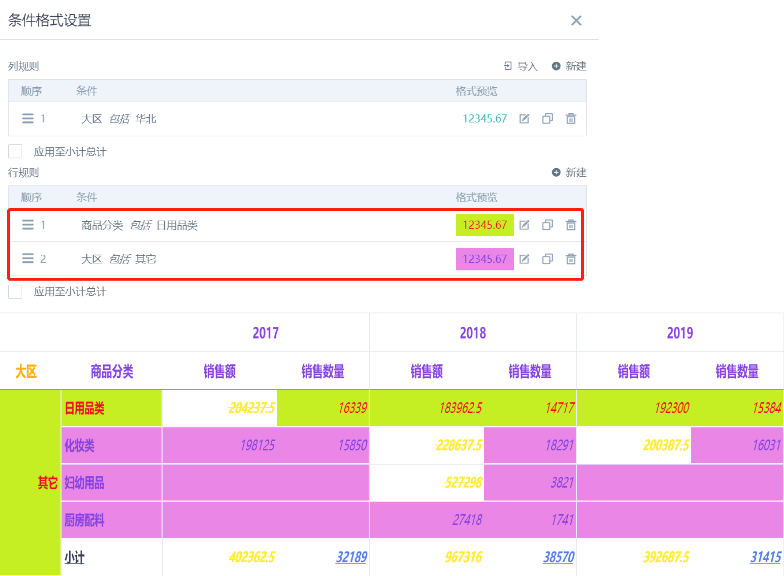
- Table data: column conditional formatting > row conditional formatting > subtotal/total > table data style > theme style.
2. Behavior of Row Conditional Formatting When Cells Are Merged
1. If the merged item has no conditional formatting but the first child row under it has row conditional formatting, the row conditional formatting of the first child row is carried to the merged item.
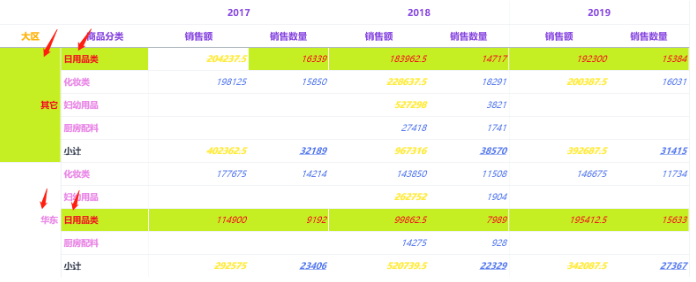
Note: In the screenshot above, the cells in the Sales Amount column without row conditional formatting applied, shown by the yellow area with a horizontal line, are affected by column conditional formatting on the current cells.
2. If the merged item has row conditional formatting and its priority is higher than other row conditional formatting, the row conditional formatting of the merged item is applied to all child data.

3. If the merged item has row conditional formatting and its priority is lower than other row conditional formatting, the cell containing the merged item is affected by the row conditional formatting of the first child row, while other child rows use the row conditional formatting of the merged item.