Dynamic Cell Attributes - Layout
Overview
This article explains the Layout capability of template cells and how to configure it. A practical example is used to demonstrate how to apply it effectively.
The example dataset used in this tutorial is: Product Training Demo Dataset.
Use Case
After dragging fields from a View into cells, if you want to define the cell fill mode, you need to use Layout, that is, the cell FM attribute (FillMode).
Feature Overview
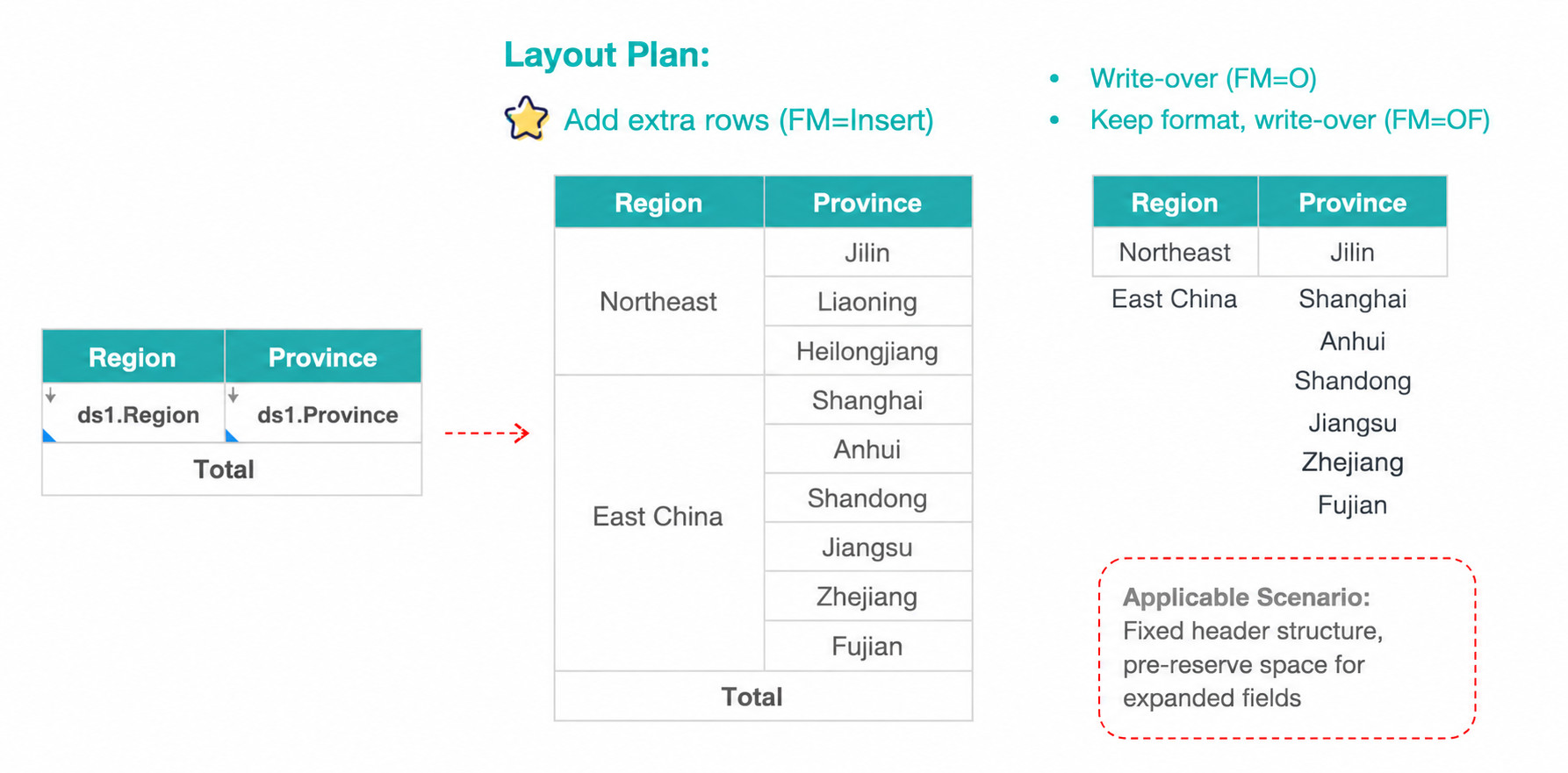
Layout supports the following modes, with Insert as the default.
- Insert (
FM=Insert): inserts new cells as blank rows or columns during data filling. - Overwrite (
FM=O): fills data into existing cells along the expansion direction without inserting blank cells and without changing the existing cell styles. - Overwrite with Format (
FM=OF): fills data into existing cells along the expansion direction without inserting blank cells, and applies the template cell style to the overwritten cells.
Overwrite and Overwrite with Format are suitable for scenarios where the header structure is fixed and space is reserved in advance for expandable fields.
Example Result
Steps
-
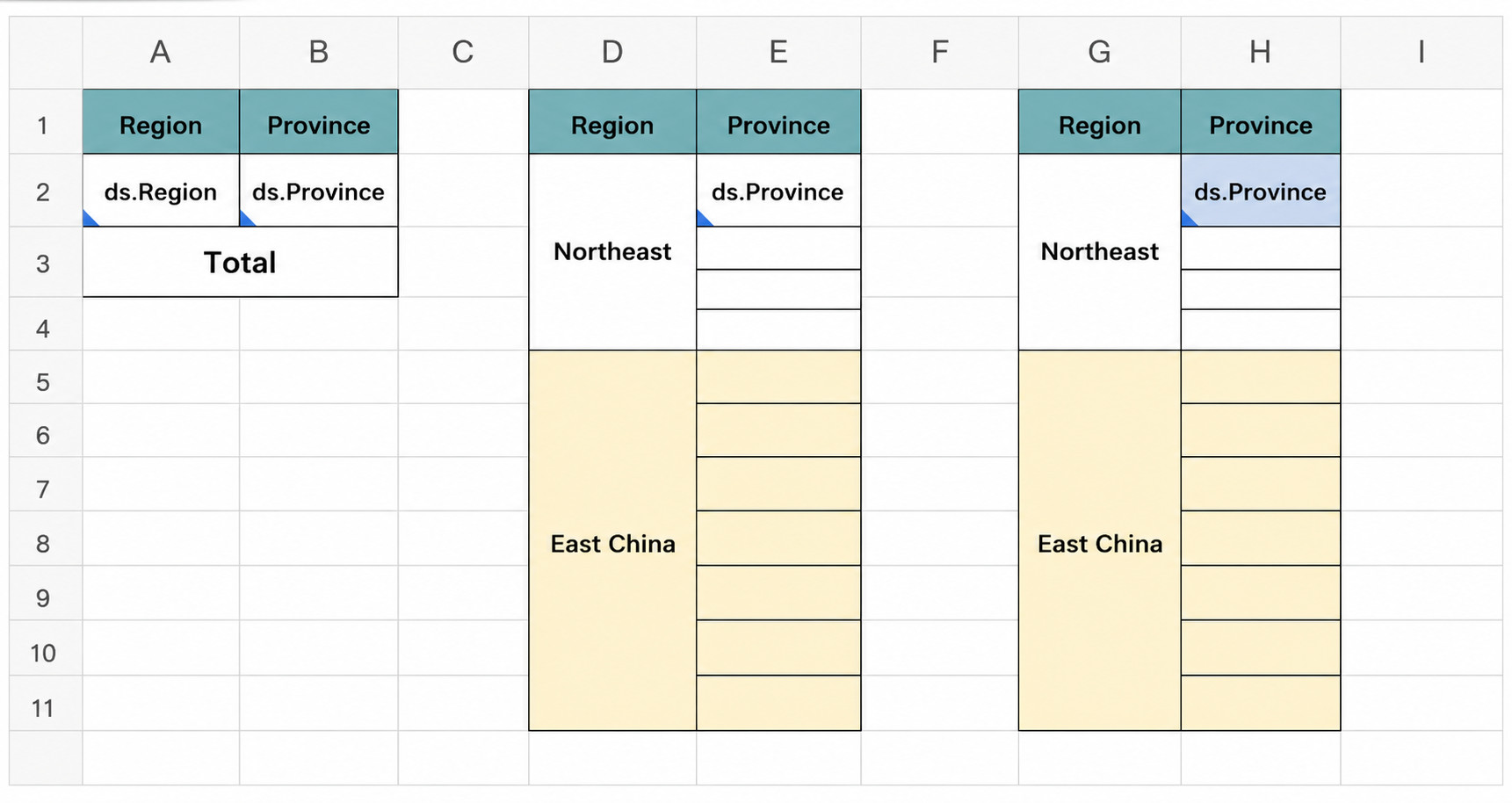
Create the static header as shown in the image, drag the required View fields into the corresponding cells, and assign cell colors for comparison.
-
Configure layout:
- The default layout is Insert, so the layout of cells
A2andB2does not need adjustment. - Double-click cell
E2, set the layout to Overwrite, and save. - Double-click cell
H2, set the layout to Overwrite with Format, and save.
-
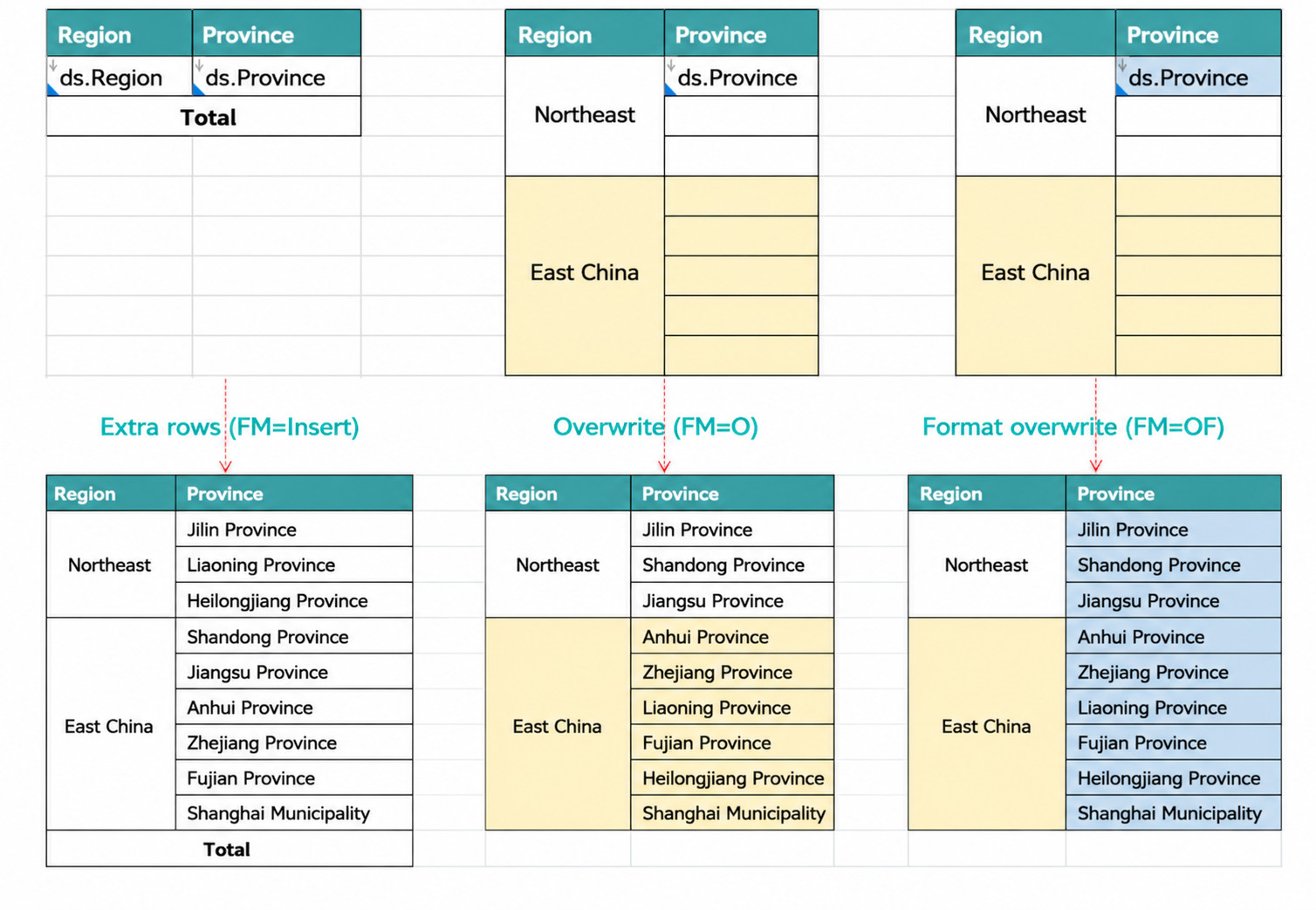
Click Preview in the upper-right corner to review the result.
Notes
It is recommended to configure dynamic attributes in the Dynamic Attributes dialog. You can also manually enter attributes inside the cell () and separate them from other attributes with half-width commas.