Join Data
Overview
Feature Description
Join Data can be understood as a form of column-level merging. The difference is that Join Data requires matching common join fields from both datasets before they can be combined. It also supports multiple join methods, and the resulting dataset can be customized by column, as shown below:
| Join Method | Description |
|---|---|
| Inner Join | Joins only the intersection of the join keys |
| Left Join | Outputs all rows from the left table by default and joins matching columns from the right table |
| Full Join | Joins the union of the join keys |
Use Cases
In practice, the product order table can be matched with the product details table using product ID and then merged into a complete order detail table containing product name, unit price, and purchase quantity.
User Guide
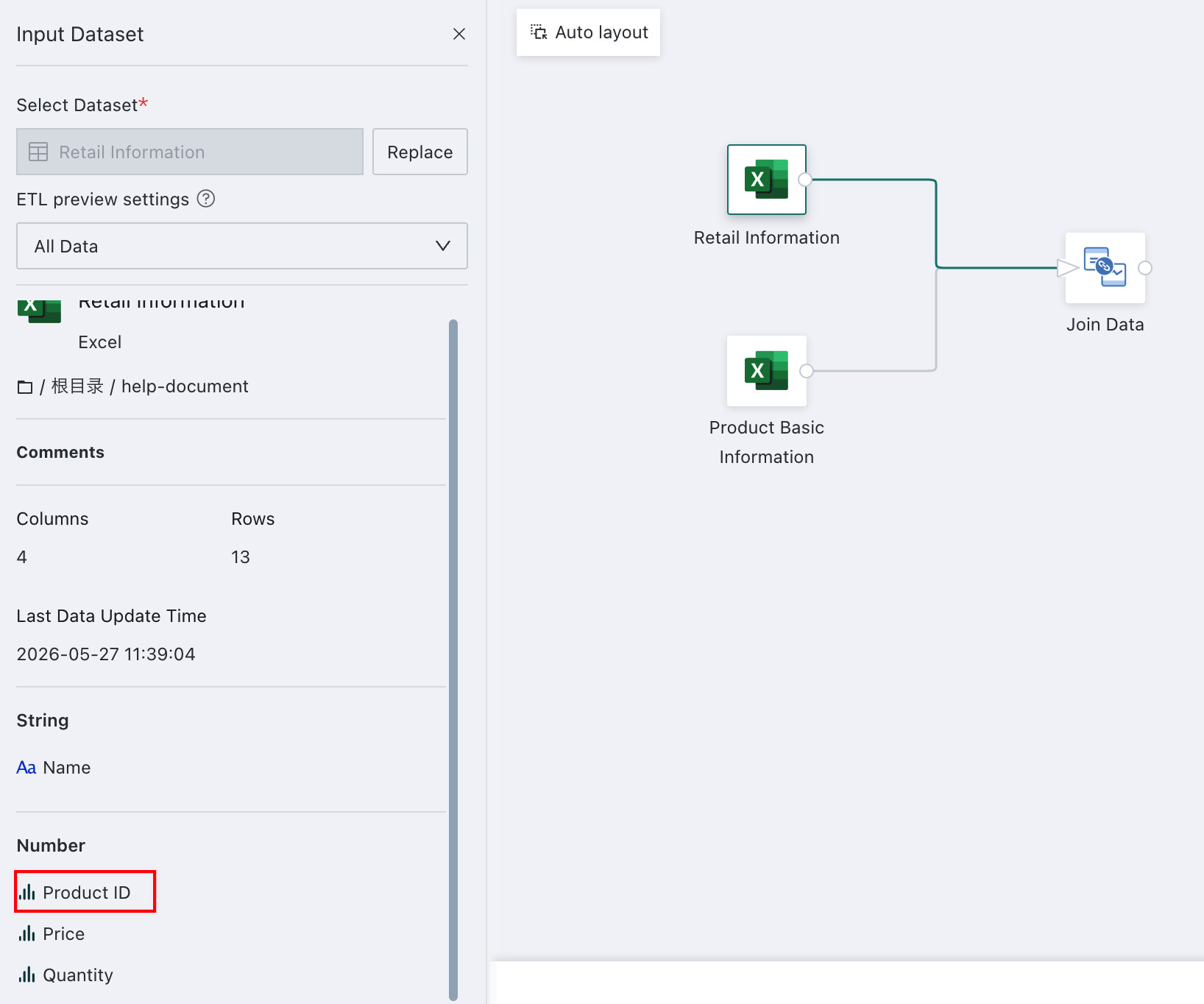
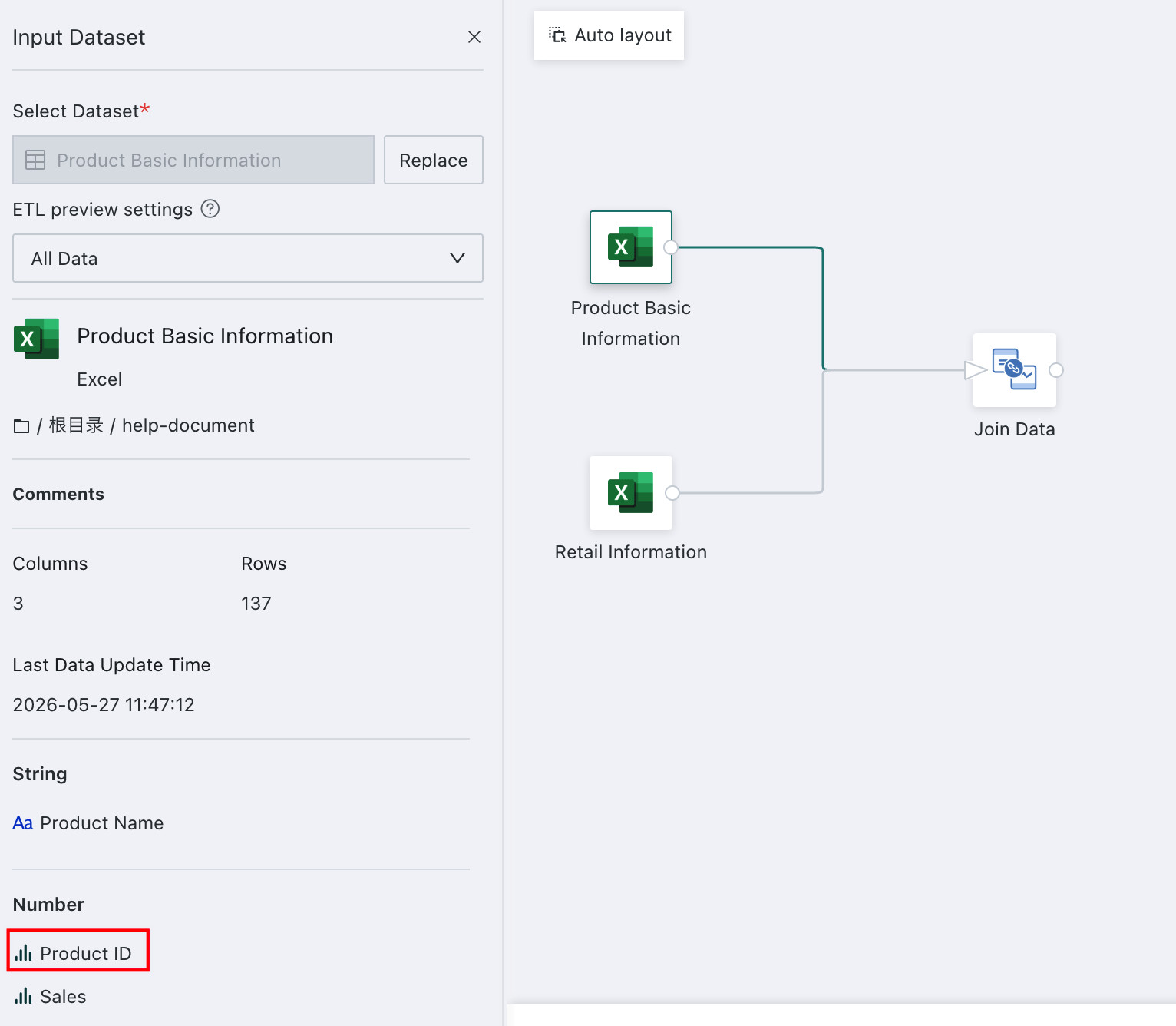
As shown in the figure, the two datasets are retail information and product master information. In the product master dataset, product ID is the unique primary key.
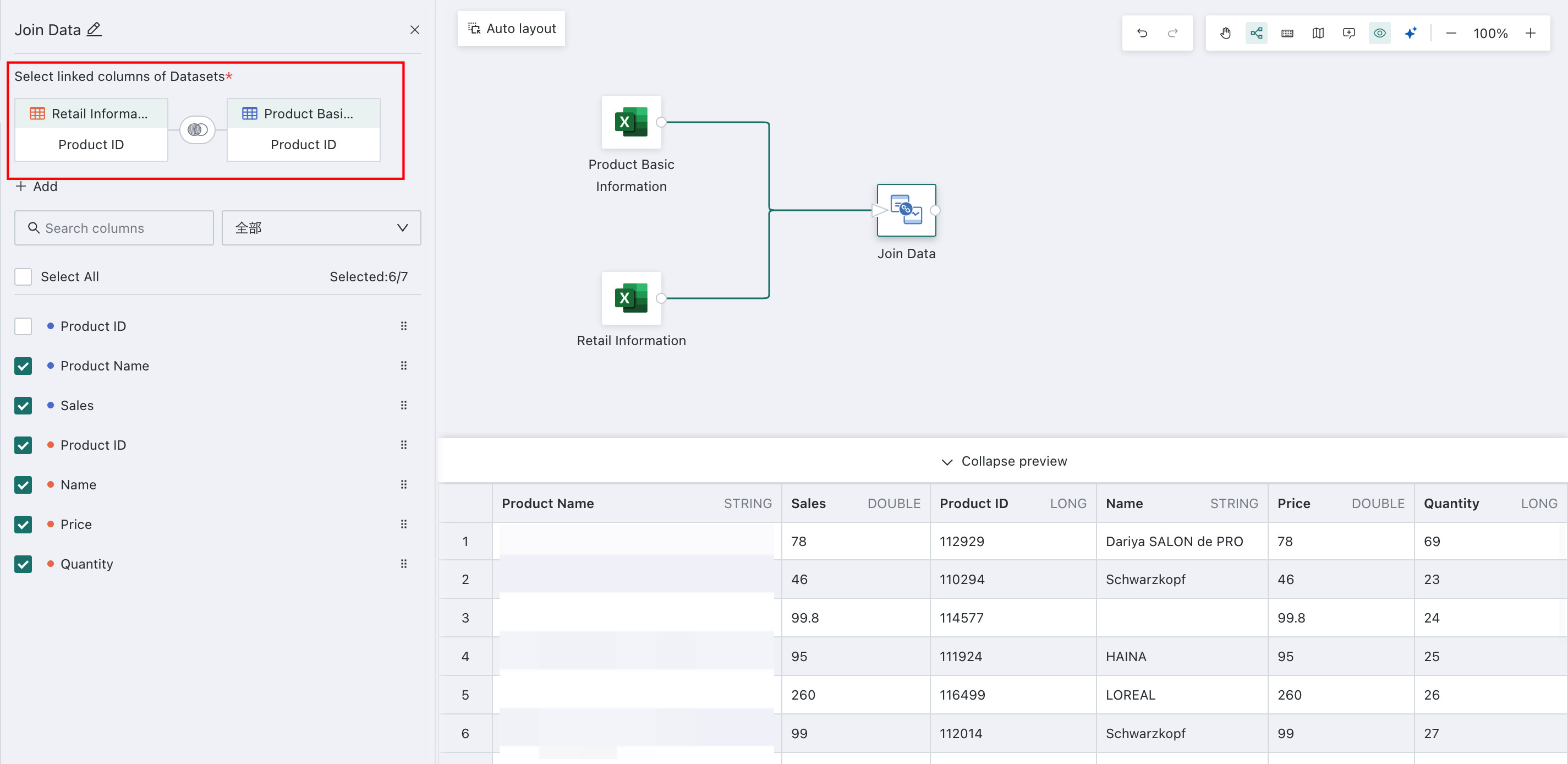
The goal is to enrich the product information in the retail dataset using the product master dataset, so Product ID is selected as the join field and a Left Join is used.
For error details, see Error Descriptions.